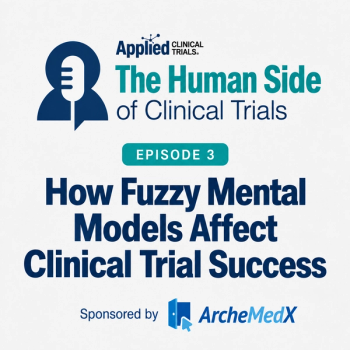
In this episode of The Human Side of Clinical Trials, the conversation focuses on an earlier and often overlooked signal of trial risk: human readiness during training and study startup.
Training is commonly measured through attendance, completion records, certificates, and quiz scores. While these measures document participation, they do not always show whether someone can apply the protocol correctly in a realistic situation. The episode explores why readiness should include more than knowledge. Trial teams also need to understand whether people can make appropriate decisions, recognize uncertainty, use available support, and accurately judge their own competence. Confidence is especially important. Someone who knows they are uncertain may stop, check the protocol, or ask for help. Someone who is confidently wrong may act without realizing that support is needed. Measuring both competence and confidence can therefore reveal risks that traditional assessments miss. Readiness data can also help sponsors and CROs provide more appropriate support. Rather than treating every site in exactly the same way, teams can identify where additional coaching, clarification, decision support, or early oversight may be needed. The goal is not to judge or label sites. It is to find gaps while there is still time to address them.
The episode leaves listeners with a practical question: What evidence tells us that a site or study team is truly ready to execute the protocol before the first participant is enrolled?