Commentary|Videos|March 19, 2026

The Data Overload Problem Facing Wearable Integration in Clinical Care

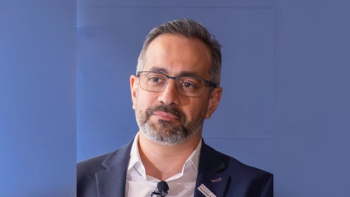
In this video interview, Mohammed Saeed, MD, PhD, chief medical officer of Solera Health, examines the operational challenges of incorporating wearable data into clinical workflows, including information overload and false alarm fatigue, and what those obstacles mean for patient safety.

Full interview summary

In a recent video interview with Applied Clinical Trials, Mohammed Saeed, MD, PhD, chief medical officer of Solera Health, discussed how wearable devices and continuous remote monitoring are giving clinicians unprecedented visibility into patient health outside the clinic, enabling earlier interventions and more proactive care management. He opened by emphasizing that wearable data captures something fundamentally unavailable from traditional clinical encounters: a real-world picture of how a patient's health holds up to everyday stresses. That unique insight, he noted, is becoming increasingly central to identifying patients who need earlier support before their conditions worsen.

Saeed went on to explain how continuous remote monitoring is shifting care delivery from reactive to proactive, allowing care teams to spot early warning signs of deterioration and make timely adjustments well before a patient reaches the emergency room. Whether that means a simple medication change over the phone or a more urgent escalation, the ability to intervene early is, in his view, the core value proposition of remote monitoring.

He was equally candid about the obstacles that remain, pointing to information overload as one of the most pressing operational challenges. With wearables generating continuous, high-velocity data on top of already overwhelming EMR workloads, providers face a growing risk of alert fatigue. When false positives become routine, he warned, clinicians can become dangerously desensitized to alarms that genuinely matter.

Saeed also addressed the critical role of FDA clearance in establishing the provider trust necessary for wearables to become a genuine part of clinical care, and stressed that reimbursement models must evolve to reflect the real time providers invest in reviewing remote monitoring data. He closed with a forward-looking perspective on how AI could parse massive, multi-source data streams and detect patterns too subtle for human observation, including changes in speaking patterns as early predictors of heart failure, potentially reshaping clinical oversight across a wide range of conditions.

Related to this article

The Human Side of Clinical Trials: Before Burden Becomes Risk, Capturing Friction in Real Time
In Episode 4 of The Human Side of Clinical Trials, host Brian S. McGowan, PhD, FACEHP, chief learning officer and co-founder of ArcheMedX, Inc., speaks with Jason Riis, PhD, CEO and chief behavioral scientist at Behavioralize, about how capturing friction closer to the moment it happens can reveal unclear instructions, technology friction, and workarounds that retrospective surveys and debriefs tend to miss.
The Next Evolution of Patient-Centered Trials Starts with Design
Decentralized trial success depends less on how far activities move away from sites than on matching each activity’s delivery model to participant burden, site readiness, and data integrity, using patient intelligence to decide where flexibility helps and where site-based care remains essential.