Register Now - Beyond Recruitment: The Future of Patient Site Engagement in Oncology Clinical Trials
|Articles|May 1, 2020

Applied Clinical Trials

  • Applied Clinical Trials-05-01-2020
  • Volume 29
  • Issue 5

More Coordination Sought for Exploding COVID-19 R&D Efforts

With hundreds of trials for potential coronavirus drugs in the works, concerns swirl around the emergence of conflicting data, useless results, and wasted efforts from multiple overlapping efforts.

With hundreds of clinical trials for potential coronovirus therapies in the works-and even more in development-concerns have mounted about the emergence of conflicting data, useless results, and wasted efforts from multiple overlapping efforts. In response, the National Institutes of Health (NIH) announced a

broad public-private partnership (PPP) to collaborate on prioritizing and coordinating research on COVID-19 drug and vaccine candidates.1 The Accelerating COVID-19 Therapeutic Interventions and Vaccines (ACTIV) initiative has support from a number of federal agencies, and some 16 pharma and biotech companies are participating through the Foundation for the National Institutes of Health (FNIH).

NIH Director Francis Collins emphasizes the importance of bringing “unassailable objectivity” to swiftly identify the most promising compounds from multiple stakeholders. Those priority therapies should gain fast and efficient regulatory oversight and vetting, moreover, through the involvement of FDA and the European Medicines Agency (EMA) in the partnership.

This initiative builds on earlier efforts, such as the COVID-19 Therapeutics Accelerator  launched in March by the Bill & Melinda Gates Foundation to drive collaboration among drugmakers, regulators, and non-governmental organizations.2 In addition, more than a dozen biopharma companies formed the COVID R&D consortium to share public information on research efforts, while several international organizations are coordinating clinical trials and developing master protocols.2

ACTIV priorities

The new NIH-based partnership appears poised to advance collaborative research more extensively, with industry and government partners providing infrastructure, subject matter expertise, and funding to identify top priority candidates for advanced testing. FNIH will manage an ACTIV steering committee to develop an inventory of potential candidates, launch master protocols with a single control arm, and set criteria for ranking potential candidates for first-wave and subsequent evaluation. Another subgroup will set standards for preclinical evaluation methods through a central repository to assess models, extend high-throughput screening facilities, and compare approaches for identifying informative assays. And a third group will tap NIH’s extensive clinical trial network infrastructure to build capacity for expediting trials and to study different populations and disease stages.

To advance vaccine development, another ACTIV group will form a collaborative framework to map epitopes and develop assays, establish protocols for sampling and immunological analyses, collect clinical data on immunological responses and endpoints, and engage with regulators on surrogate endpoints for clinical evaluation.

ACTIV’s initial goal is to select six to  eight compounds for clinical trials that assess different mechanisms of action, Collins explained in a recent webinar sponsored by the Duke Margolis Center for Health Policy (comments available at https://bit.ly/3fc45gi). He noted that the working groups met in early April to start the process of identifying the highest potential therapies, particularly those where manufacturing scale-up won’t be a major roadblock. The candidates will include anti-virals with well-established mechanisms of action, immune therapies, and immune suppressants for patients with advanced lung disease.

Establishing “really organized clinical trial capacity” is critical to be able to slot promising compounds into networks utilizing master protocols, Collins emphasized. Even if current studies of existing therapies such as Gilead’s remdesivir show benefit, he predicts a strong need for combination therapies going forward.

FDA is deeply engaged in all these working groups to ensure that the group’s clinical studies will meet regulatory standards. And it’s all moving “at rocket pace,” Collins observed, with the goal of identifying two to three promising therapies by July or August for further testing in the fall. A main benefit of this initiative, he noted, is that “all stakeholders are together around the table.” Biopharma companies are “not just pushing their own candidates,” he noted, and are offering clinical trial capacity “to get this done.”


1. https://www.nih.gov/news-events/news-releases/nih-launch-public-private-partnership-speed-covid-19-vaccine-treatment-options

2. https://www.biocentury.com/article/304947/nih-and-fnih-are-leading-a-public-private-parternship-to-defeat-covid-19


Related to this article

Closing the Community Access Gap: Q&A with Kent Thoelke, Paradigm Health
In this Q&A, Kent Thoelke, CEO of Paradigm Health, discusses why participation gaps in community and rural settings come down to both patient cost barriers and site infrastructure, how legacy workflows weigh on community clinics, and what policy and technology changes it would take to make clinical research a real care option for more patients.
© Grispb - © Grispb - stock.adobe.com
Mistral and OpenAI produced identical overall eligibility labels across 200 synthetic patient-study assessments, with criterion-level disagreements concentrated in inclusion criteria where models switch between “Uncertain” and “Not included” when records lack sufficient evidence, so model choice should be driven by deployment architecture, control, and cost rather than assumed interchangeability.
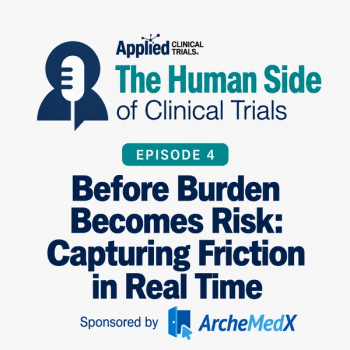
The Human Side of Clinical Trials: Before Burden Becomes Risk, Capturing Friction in Real Time
In Episode 4 of The Human Side of Clinical Trials, host Brian S. McGowan, PhD, FACEHP, chief learning officer and co-founder of ArcheMedX, Inc., speaks with Jason Riis, PhD, CEO and chief behavioral scientist at Behavioralize, about how capturing friction closer to the moment it happens can reveal unclear instructions, technology friction, and workarounds that retrospective surveys and debriefs tend to miss.