
“Instead of requiring employees to meet AI where it exists, such as by jumping between various productivity applications and an AI assistant, AI now meets employees where they are. As new AI models emerge and use cases continue to evolve, a platform can reduce the lag and cost of adopting new efficiencies because organizations no longer need to start from scratch each time.”
Commentary|Articles|September 18, 2026
How a Platform Approach Can Scale AI’s Impact in Life Sciences
Author(s)Jason Makuch
Listen
0:00 / 0:00
A platform-based approach connects AI across workflows, data and governance, helping life sciences organizations move from isolated wins to real scale.
Advertisement
AI adoption is moving quickly in life sciences, but organizations are still learning how to turn early AI successes into sustained enterprise impact. While many are seeing task-level productivity gains, only 1 in 5 life sciences organizations are scaling AI and seeing measurable value from it.1
The challenge now is to make gains repeatable across clinical, medical affairs, and commercial workflows. The answer is not to simply deploy more AI tools.
Instead, organizations need to make AI readily accessible in daily workflows, connected across systems, and governed consistently — all while reducing the burden on IT teams. A well-designed platform can also reduce the number of tools employees need to complete a workflow by bringing AI into the applications they already use and coordinating actions across connected systems.
They also need to rethink existing processes and prepare employees for new ways of working. Otherwise, AI risks being just another disconnected tool with limited value.
To move from isolated gains to broader business impact, organizations need a platform approach that enables them to scale AI with the trusted data, domain expertise, and governance that life sciences demands.
The challenge of fragmented AI
AI is still evolving quickly, and many organizations have started with individual AI tools or agents aimed at specific tasks. Those tools or agents may make tasks more efficient, but the gains realized may not automatically translate into broader workflow improvements.
Each new tool requires another implementation, another integration, another interface for users to learn, and another system for operational teams to manage and secure. More fragmented tools also create more applications and interfaces that employees need to switch between, creating more friction in their daily work.
Over time, this influx of tools can create more complexity and silos — the very things that AI is supposed to reduce. These challenges are particularly pronounced in life sciences operations, where data exchanges must be secure and compliant.
Every time information moves between disconnected tools, organizations need to make sure the right integration, governance, and validation is in place.
Why a platform-based approach?
A platform-based approach uses a common environment for implementing, using, managing, and expanding AI capabilities across a life sciences organization. Instead of repeatedly integrating new tools, training employees on new systems or managing multiple governance models, a platform-based approach allows organizations to deploy AI with consistent workflows, data access, governance expectations, and user experiences.
The strongest platform approaches can also simplify how work gets done. Integrations bring AI into the tools employees already use, while AI agents can take approved actions across connected systems on the user’s behalf.
This gives organizations an opportunity to reduce tool switching and move an entire workflow forward from a single interaction, rather than asking employees to complete each step in a different application. This fundamentally changes how employees interact with AI.
Instead of requiring employees to meet AI where it exists, such as by jumping between various productivity applications and an AI assistant, AI now meets employees where they are. As new AI models emerge and use cases continue to evolve, a platform can reduce the lag and cost of adopting new efficiencies because organizations no longer need to start from scratch each time.
Realizing this potential, however, requires the right platform. Rather than requiring separate integrations for every new capability, a platform should consistently and seamlessly integrate with the applications employees use every day.
It should provide APIs to extend AI into proprietary systems. It should also work alongside the AI assistants that organizations already use.
Interoperability is especially important for life sciences organizations because clinical, medical affairs, and commercial teams depend on consistent handoffs, regulated workflows, and trusted data from a variety of sources. When a platform builds in AI capabilities, they can connect across functions while integrating enterprise, customer, and third-party data.
Driving meaningful change in life sciences
With a platform approach, life sciences organizations can wield AI as an enterprise capability to support entire workflows instead of isolated tasks. As AI capabilities build on one another, organizations can accelerate decision-making, shorten development timelines, and create more capacity for innovation.
This approach aligns with the operational realities of clinical development and commercialization, where AI must operate across complex workflows, large datasets, and regulated processes.
On the clinical side, a platform-based approach can reduce the risks and inefficiencies that come with connecting different tools and vendors across a clinical trial workflow. This can reduce burden for clinical development teams that must navigate shifting regulations, country-specific requirements, and process-heavy workflows.
Consider scientific literature reviews, which are essential for clinical decision-making but require researchers to spend significant time manually searching, screening, and extracting data from ever-growing literature volumes. AI can automate much of this work while keeping experts in the loop to validate outputs.
Pharmaceutical companies are already using AI-assisted literature review capabilities to perform review activities three times faster and reduce manual data-extraction effort by up to 70%. These benefits are important because one of the biggest bottlenecks in clinical development is throughput.
Only so many sites are available to run trials. Every opportunity to reduce risk, shorten startup cycles, and accelerate trial execution can help organizations move faster and increase capacity for more trials without compromising quality.
On the commercial side, organizations can better use the fast-growing volumes of data at their disposal. Today, commercial teams use data from drug development, healthcare systems, patient populations, third parties, and other sources.
A platform approach can bring all this data together so commercial teams can truly put it to work. One leading pharmaceutical company used AI to better engage healthcare professionals (HCPs) across multiple brands and markets.
Predictive engagement signals combined with AI-driven next-best-action recommendations helped inform both HCP outreach and what follow-up actions to take. The result was a four-fold improvement in identifying high-value patients, along with 20% and 36% increases in new patient initiation for two of the company’s brands.
Enabling AI adoption at scale
A platform provides a foundation for enterprise AI; however, technology is only one factor that determines how well an organization will deploy and scale its AI capabilities.
Before deploying AI, organizations need to know where it can have a meaningful and measurable impact. Sometimes, organizations think an AI capability failed when in reality the issue was its implementation.
Teams may have deployed it in the wrong workflow, introduced it without enough user training, or measured it without a baseline for comparison. To avoid these AI “false negatives,” organizations need clear goals, defined operating procedures, and metrics that show how AI impacts performance.
Organizations also need to educate and motivate employees to incorporate AI into their daily routines. Today, nearly 4 in 10 life sciences organizations still do not have an employee AI training program in place.2
Changing work habits is not easy, and employees may not embrace AI if it is difficult to use or access. AI capabilities should always be one click away, consistent in their use, and reinforced with training and education.
Including elements, such as starter prompts or in-context advice, within AI capabilities can also encourage employees to use and experiment with them. For example, an AI assistant could recognize that a field rep is preparing a meeting plan or pitch deck for a provider meeting and offer a sample prompt for tailoring it to that provider.
Finally, and arguably most importantly, AI adoption requires trust. Especially in a highly regulated industry, such as life sciences, people need confidence that AI-enabled processes can deliver the same or better results than earlier methods achieved.
This is why organizations need a measured approach that uses governed workflows, maintains human oversight, validates AI outputs, and compares error rates against human-led processes.
Making more time for what matters most
Individual productivity gains are just the beginning. AI delivers its real promise when those gains build on one another to create sustained organizational momentum — something that is difficult to achieve with disconnected tools that work in isolation.
By embracing a platform approach that makes AI easier to adopt, govern and use across functions, life sciences organizations can scale AI to accelerate scientific discovery, support more studies, sharpen commercial decision-making, and ultimately improve outcomes for more patients.
About the Author
Jason Makuch is a Senior Director of Product Management at IQVIA, leading AI product development for the IQVIA.ai agent platform. Jason had over 20+ years of experience in product management, AI/ML innovation, and platform architecture, including leadership roles at Amazon Web Services, where he worked on machine learning and generative AI solutions. At IQVIA, he focuses on helping life sciences organizations move from fragmented AI tools to integrated, enterprise-scale platforms that enable interoperability, scalability, and measurable impact across clinical and commercial functions.
References
1. Bain & Company. The Human Imperative: Scaling AI Across Life Sciences. Bain & Company; 2026. Accessed September 11, 2026.
2. White & Case LLP. New Frontiers: How AI Is Transforming the Life Sciences Industry. White & Case LLP; 2026. Accessed September 11, 2026.
Advertisement
Related to this article
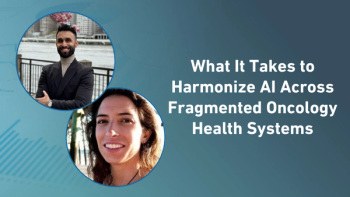
In this video interview, Saamir Pasha and Carole Berini, PhD, of Ontada, explain how building trust into the data foundation—through source lineage, standardization, and reconciliation—is what makes reliable real-world evidence generation in oncology possible.

In this Q&A, Claire Riches, VP of clinical solutions at Citeline, discusses how AI is transforming endpoint selection and protocol pressure-testing, what data inputs matter most for realistic enrollment planning, and why the tools are more accessible than most sponsors assume.

Radiopharmaceutical therapy is exposing a broader challenge for clinical development: scientific innovation can advance only as fast as the infrastructure, data, and cross-functional decisions required to deliver it.
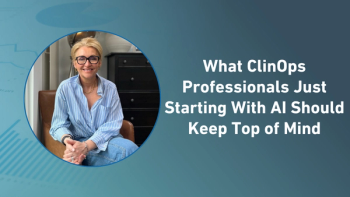
In this video interview, Claire Riches, VP of clinical solutions at Citeline, offers practical guidance for clinical operations teams beginning their AI journey—making the case that the tools are more accessible than many assume and that waiting to start is a competitive risk in itself.
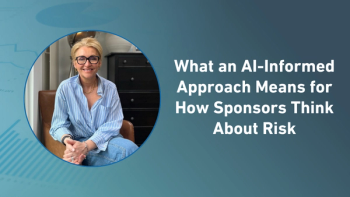
In this video interview, Claire Riches, VP of clinical solutions at Citeline, explains how AI is shifting trial risk management from reactive to proactive—enabling sponsors to pressure-test protocols and anticipate pivots before a single patient is enrolled.

AI agents in clinical operations acquire broader autonomous capability through expanded permissions, tools, memory, and delegated authority, requiring governance focused on whether effective capability has shifted outside approved boundaries rather than whether software has changed.
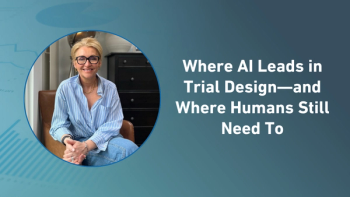
In this video interview, Claire Riches, VP of clinical solutions at Citeline, makes the case for AI as a sophisticated strategic advisor in trial design while arguing that humans must remain in the lead—especially when factors the model can't fully account for are at stake.

RWE is finding a role earlier in drug development than ever before, but the data quality, integration, and organizational alignment required to make it regulatory-grade are still catching up to the ambition.
Advertisement
Advertisement
Trending on Applied Clinical Trials Online
1
Using AI to Design Better Trials Before the First Patient Enrolls: Q&A with Claire Riches, Citeline
2
ACT Brief: FDA Transparency Roadmap, Radiopharmaceutical Trial Operations, and AI-Powered Enrollment Prediction
3
ACT Brief: AI and Protocol Design, Site Training Readiness, and GLP-1 Unmet Needs
4
FDA Releases Transparency Roadmap Outlining Disclosure Priorities Across Drug Development and Regulatory Review
5