Register Now: Beyond EDC: Designing a Connected Data Strategy for Predictive Clinical Development
Commentary|Videos|January 15, 2025

Streamlining Protocol Development Timelines

In this video interview, Kimberly Tableman, founder & CEO, ESPERO, discusses historical challenges with long protocol development timelines and how they can be addressed.

In a recent video interview with Applied Clinical Trials, Kimberly Tableman, founder & CEO, ESPERO, discussed the challenges and trends in protocol development for clinical trials. She also highlighted technological advancements, such as data interoperability standards like ICH M11 and CDISC, and how they are expected to streamline protocol development and support generative AI in 2025.

ACT: What do you think are the biggest factors in long protocol development timelines? How can they be streamlined?

Tableman: Protocol development has historically been a very lengthy process, primarily because there's multiple groups that need to collaborate internally within a pharma company. In addition to that, they historically have been built in Word documents, they have had to be emailed from person to person, group to group, there has been a “where is the is the protocol currently, and who has it? Is it on somebody's hard drive? Where is it in the SharePoint site? What version are we on?” There are some challenges that are just administrative and technology focused, but also there's typically a large number of meetings of going back and forth and ensuring that everyone on the study team has the same understanding. There's a real opportunity to improve the overall ability to build a protocol and build it more quickly, using technology and also facilitating collaboration amongst the team so that everyone's looking at the same set of data, looking at the same information, able to provide their input on their specific area of expertise, and really just overall, streamline that process, also elevate the understanding of the whole study team on the impacts of designing the study a certain way. How is that going to impact, essentially, being able to build out case report forms and things of that nature? There's also an up-leveling of education overall that would be really helpful.


Related to this article

Where the Industry Is Headed as Clinical, Operational, and Real-World Data Connect
In this video interview, Rajneesh Patil, global head of AI, digital, and innovation in clinical development at Syneos Health, describes the industry’s trajectory toward a unified intelligence orchestration environment—and explains why the future isn’t one model that knows everything, but a trusted system that brings the right evidence to the right human decision.
The Human Side of Clinical Trials: Why Fuzzy Mental Models Undermine Clinical Trial Execution
In Episode 3 of The Human Side of Clinical Trials, hosts Brian S. McGowan, PhD, FACEHP, chief learning officer and co-founder of ArcheMedX, Inc., and Kelly Ritch, chief operating officer of ArcheMedX, Inc., speak with Jason Riis, PhD, CEO and chief behavioral scientist at Behavioralize, about why a well-written protocol doesn’t always translate into consistent execution, and how designing for the way people actually think and learn can reduce site burden and the need for costly unlearning.
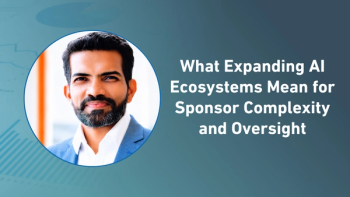
What Expanding AI Ecosystems Mean for Sponsor Complexity and Oversight
In this video interview, Rajneesh Patil, global head of AI, digital, and innovation in clinical development at Syneos Health, argues that CROs must act as orchestrators rather than aggregators—and that the real test of any AI ecosystem is whether it reduces sponsor coordination burden or just hands it back to them.
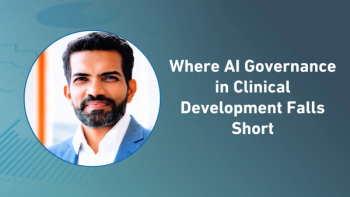
Where AI Governance in Clinical Development Falls Short
In this video interview, Rajneesh Patil, global head of AI, digital, and innovation in clinical development at Syneos Health, identifies three recurring failure modes in AI governance frameworks—and explains why responsible AI must be an ongoing operating discipline, not a one-time approval gate.