Commentary|Videos|October 16, 2026

What It Actually Means to Embed AI Across the Clinical Operating Model

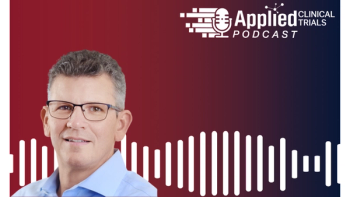
In this video interview, Rajneesh Patil, global head of AI, digital, and innovation in clinical development at Syneos Health, explains why the shift from narrow AI tools to a continuous learning clinical operating system is where the real operational value lies—and what it takes to get there.

In a recent video interview with Applied Clinical Trials, Rajneesh Patil, global head of AI, digital, and innovation in clinical development at Syneos Health, discussed what it actually means to embed AI across the clinical operating model—and why the shift from narrow, task-level automation to a continuous learning system is where the real operational value lies. He opened by drawing a clear distinction between point solutions and embedded AI: when each function—protocol design, feasibility, monitoring, data review—uses AI in isolation, task efficiencies improve but handoffs remain slow. True embedding turns those isolated automations into a connected operating system where people spend less time assembling information and more time applying judgment.

On risk management, Patil framed data compression not as a speed gain but as a structural shift from retrospective review to early intervention. The bottleneck in most trials, he argued, is not lack of data but the lag between signal and action—and shortening that distance is what allows clinical, medical, data, and quality teams to intervene before risks grow.

Patil was direct about where AI governance frameworks tend to break down, identifying three recurring failure modes: treating governance as a one-time approval rather than an ongoing discipline; governing the model while neglecting the surrounding workflow and human decisions; and allowing accountability to dilute across vendors and systems. His framing—that responsible AI should make it possible to see what AI influenced, who reviewed it, and how concerns were resolved—positions governance as an operating discipline, not a gate.

He addressed the complexity risk of expanding AI ecosystems head-on, arguing that CROs must act as orchestrators rather than aggregators, and that the right test of any AI partnership is whether it reduces sponsor coordination burden or simply transfers system integration responsibility back to the sponsor. He closed by describing the industry’s trajectory toward a unified intelligence environment where study design, execution, and real-world evidence form a continuous feedback loop—not through a single all-knowing model, but through a trusted orchestration environment that brings the right evidence to the right human decision at the right time.

Related to this article

Where AI Leads in Trial Design—and Where Humans Still Need To
In this video interview, Claire Riches, VP of clinical solutions at Citeline, makes the case for AI as a sophisticated strategic advisor in trial design while arguing that humans must remain in the lead—especially when factors the model can't fully account for are at stake.
© putilov_denis - © putilov_denis - stock.adobe.com
Real-time clinical trials require standardized digital data capture at the point of care through scaled eSource-EDC-EHR integration, but progress stalls because competing standards lack regulatory enforcement and one-off system integrations cannot scale beyond single studies without industry-wide alignment and legal clarity on data ownership.