AI can turn complex protocols into first-pass budget inputs, letting sponsors start budgeting sooner while budget builders shift from data entry to review.
Trialbee CEO Matt Walz explores the current impact of AI in delivering practical gains in clinical development and reflects on its future potential, where enrollment predictability may be the biggest prize of all.
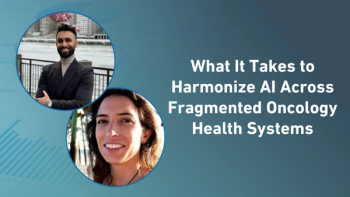
In this video interview, Saamir Pasha and Carole Berini, PhD, of Ontada, explain how building trust into the data foundation—through source lineage, standardization, and reconciliation—is what makes reliable real-world evidence generation in oncology possible.
In this Q&A, Claire Riches, VP of clinical solutions at Citeline, discusses how AI is transforming endpoint selection and protocol pressure-testing, what data inputs matter most for realistic enrollment planning, and why the tools are more accessible than most sponsors assume.
Radiopharmaceutical therapy is exposing a broader challenge for clinical development: scientific innovation can advance only as fast as the infrastructure, data, and cross-functional decisions required to deliver it.
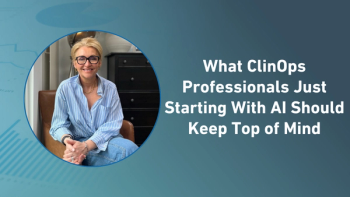
In this video interview, Claire Riches, VP of clinical solutions at Citeline, offers practical guidance for clinical operations teams beginning their AI journey—making the case that the tools are more accessible than many assume and that waiting to start is a competitive risk in itself.
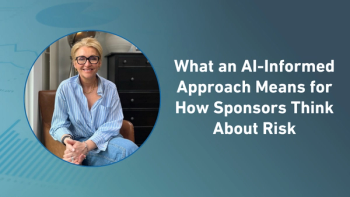
In this video interview, Claire Riches, VP of clinical solutions at Citeline, explains how AI is shifting trial risk management from reactive to proactive—enabling sponsors to pressure-test protocols and anticipate pivots before a single patient is enrolled.
AI agents in clinical operations acquire broader autonomous capability through expanded permissions, tools, memory, and delegated authority, requiring governance focused on whether effective capability has shifted outside approved boundaries rather than whether software has changed.