





Electronic Data Capture
Latest News
Advertisement
Latest Videos
Shorts
1:27
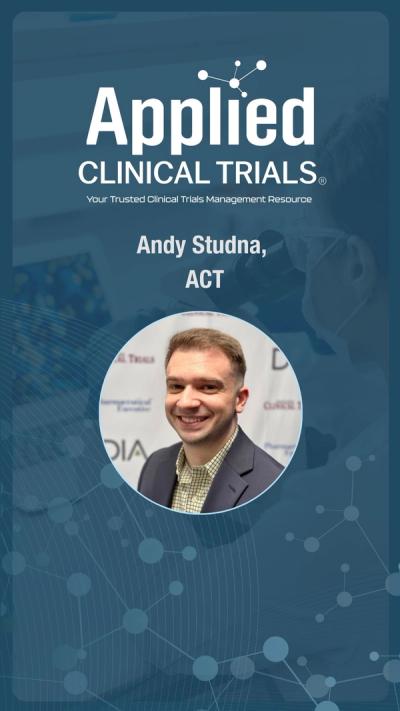
ACT Ops Take: Modernizing Participant Payments for Clinical Trial Success
7 months ago
by
Andy Studna, Senior Editor
Advertisement
More News
Advertisement

As clinical trials grow increasingly complex and multi-modal, the pharmaceutical industry is pivoting toward AI-driven agentic orchestrators and lakehouse architectures to untangle disparate data streams, ensure regulatory compliance, and accelerate time-to-insight.

As the FDA formally recognizes real-world evidence as eligible confirmatory evidence for drug approval, sponsors face a growing imperative to build the data infrastructure, organizational alignment, and analytical capabilities needed to use RWE effectively across the development lifecycle.
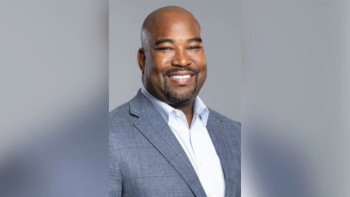
Real-world evidence is shifting from a post-market footnote to a concurrent validation layer running alongside trial data, requiring organizations to build unified data environments that integrate EHRs, claims, and patient-reported outcomes on an ongoing basis rather than retrospectively.
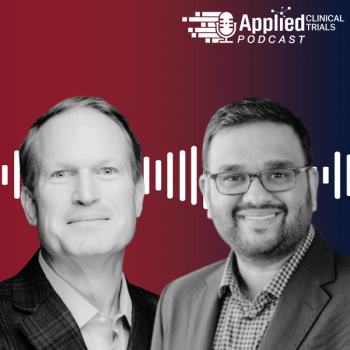
In this episode of the Applied Clinical Trials Podcast, Jonathan Andrus, co-CEO, CRIO, and Samir Jain, vice president of product management, healthcare data interoperability and EHR solutions, Medidata, discuss how their new partnership is enabling seamless data flow between eSource and enterprise platforms to reduce site burden and improve data quality across global clinical trials.

When using electronic clinical outcome assessments (eCOA), ensuring clear stakeholder alignment throughout the lifecycle of a study regarding data management activities is critical to success.

A collaborative study by the Tufts Center for the Study of Drug Development and CRIO identifies protocol interpretation and source document preparation as an understudied yet significant bottleneck in study start-up timelines that may hold key opportunities for efficiency gains.

Why rigorous testing and validation matter more than ever.

As eSource adoption expands, industry leaders are confronting new questions around AI oversight, unstructured data activation, institutional readiness, and regulatory trust. Here’s how experts say the next phase will unfold.

Individual-level attribution modeling reveals that real-world semaglutide effectiveness is not a fixed property of the molecule, but an interaction between pharmacological exposure and modifiable care and support conditions, carrying implications for real-world evidence interpretation and clinical development.
Persistent delays and inefficiencies in COA licensing and translation stem from limited pre-license access and fragmented processes, making a strong case for providing outcome assessment measures earlier to reduce risk and accelerate trial start-up.
Advertisement

Only with recent advances in cloud computing, data standards, and interoperable platforms has it become feasible to realize the full potential of a digital thread.

New research finds that while eSource adoption is advancing through EHR-to-EDC workflows, scaling its impact will depend on integrating unstructured clinical data using AI, shared standards, and collaborative validation models across sites, sponsors, and vendors.

Strong relational governance between technology vendors and sponsor–CRO teams is becoming a critical foundation for eCOA trial success, enabling faster study launches, clearer communication, proactive issue management, and sustained quality across entire trial portfolios.

AI-driven discovery, EHR-based real-world evidence, and synthetic patient modeling are rapidly reshaping drug repurposing, reducing development timelines, expanding therapeutic applications, and accelerating regulatory acceptance of computational approaches.

Emerging applications of AI/ML, automation, and digitization are helping sponsors cut clinical trial start-up times to as little as four weeks, reduce data errors, and enhance patient engagement—demonstrating how tech-enabled processes are reshaping trial efficiency and experience across the study lifecycle.

The full value of clinical data will only be unlocked by redesigning how it’s captured, connected, and applied to accelerate decisions, improve trials, and better serve patients.

An overview of key considerations shaping the BGM and CGM decision, why both often coexist in trials today, and how eCOA platforms play a critical role in supporting this data collection at scale.

How the application of artificial intelligence, broader use of real-world evidence, decentralized clinical trials, master protocols, and risk-based quality monitoring, together with strong ethical oversight and increased collaboration, are contributing to better healthcare delivery and strengthening the role of clinical research in driving global health progress.
Why future-ready pharma companies must embrace AI-driven, real-time decision-making.

How human-centered AI that is focused on customer, user, and employee experience can drive real transformation in clinical trials and beyond by aligning intelligent technologies with the people who use them.

Clinical research evolves to prioritize patient-centered outcomes, integrating accessibility standards in electronic data capture for inclusive clinical trials.
Companies share their experience in future-proofing clinical data technology.
Strategies for ensuring that innovation with PROs remains parallel with advancements in disease detection and progression.

The challenges, opportunities, and strategic outlook for oncology research centers.

COVID-19 not only advanced scientific boundaries, but also transformed research methodologies and accelerated adaptive clinical trial design.
Advertisement
Advertisement
Trending on Applied Clinical Trials Online
1
Building Standardized Evidence for eSource-Enabled Clinical Trials: Multi-Site Validation of a Clinical Research Coordinator Satisfaction Methodology
2
Bipartisan Bill Would Build Reusable Clinical Trial Networks, With a Focus on Rare Disease
3
Where the Industry Is Headed as Clinical, Operational, and Real-World Data Connect
4
Where AI Governance in Clinical Development Falls Short
5