




Technology
Latest News
Advertisement
Latest Videos


Advertisement
More News
Advertisement
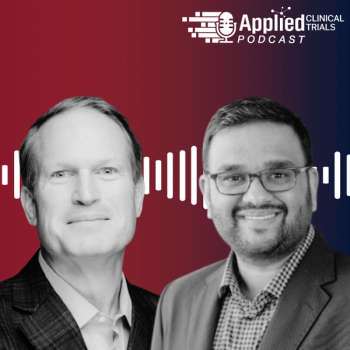
In this episode of the Applied Clinical Trials Podcast, Jonathan Andrus, co-CEO, CRIO, and Samir Jain, vice president of product management, healthcare data interoperability and EHR solutions, Medidata, discuss how their new partnership is enabling seamless data flow between eSource and enterprise platforms to reduce site burden and improve data quality across global clinical trials.

Behavioral science reveals how recruitment failures, site disengagement, and underrepresentation in clinical trials are rooted in early design decisions, and what sponsors can do to address them before they become costly problems.

The execution translation gap—the failure to convert identified problems into coordinated, timely action—costs millions per trial through delayed amendments, persistent deviations, and slow site activation, yet remains addressable through aligned accountability and proactive execution management.

A collaborative study by the Tufts Center for the Study of Drug Development and CRIO identifies protocol interpretation and source document preparation as an understudied yet significant bottleneck in study start-up timelines that may hold key opportunities for efficiency gains.
Sponsored Content
In this video interview, Nick Frenzer, general manager of site solutions at Veeva Systems, discusses why eSource has been difficult to implement at scale, how FHIR-based technology is changing that, and what Veeva eSource means for sites, sponsors, and the broader clinical trial ecosystem.
In this Q&A, Krishna Cheriath, VP and head of clinical research digital data and AI at Thermo Fisher Scientific, examines how AI is reshaping clinical operations—from case intake and trial design to site burden reduction and the emerging reality of agentic AI in the workforce.
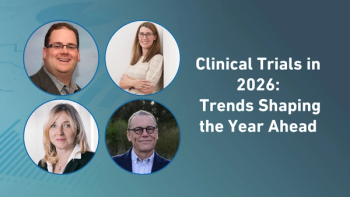
In this video compilation, industry experts share their perspectives on the operational, technological, and methodological shifts defining clinical research in 2026.
Pharma modernization initiatives stall not from lack of ambition but from expanding governance layers that distance leadership from execution, slowing decision velocity and delaying the systems integration that drives competitive advantage.
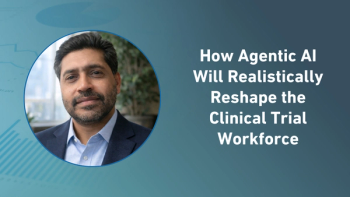
In this video interview, Krishna Cheriath, vice president and head of clinical research digital data and AI at Thermo Fisher Scientific, introduces a practical augmentation scale for thinking about how AI agents will transform clinical trial roles over the next two years and why workforce planning for that shift needs to start now.
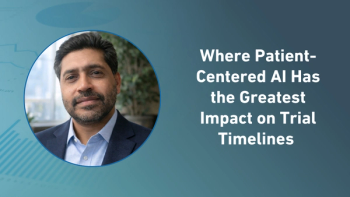
In this video interview, Krishna Cheriath, vice president and head of clinical research digital data and AI at Thermo Fisher Scientific, maps the highest-impact opportunities for AI across the trial lifecycle—from smarter protocol design and enrollment matching to data collection, cycle time compression, and the emerging potential of synthetic data in rare disease.
Advertisement

Risk-based monitoring requires integrated data systems, validated analytics, and strong governance to work effectively across global trials, but sponsors face significant technical and operational challenges that demand strategic solutions and organizational alignment.
In this video interview, Krishna Cheriath, vice president and head of clinical research digital data and AI at Thermo Fisher Scientific, argues that effective patient-centered AI must go beyond direct-to-patient tools to address social determinants of health and reduce the administrative burden on sites so that investigators can focus predominantly on the patient.
In this video interview, Krishna Cheriath, vice president and head of clinical research digital data and AI at Thermo Fisher Scientific, outlines the leadership priorities, team structures, and boundary-spanning capabilities that separate organizations that realize meaningful AI gains from those that struggle to move beyond the pilot stage.
In this video interview, Krishna Cheriath, vice president and head of clinical research digital data and AI at Thermo Fisher Scientific, explains how AI is being applied to case intake today and why successful adoption depends less on technology than on reimagining workflows and investing in workforce upskilling.
Digital twin technology can reliably simulate standard-of-care treatment outcomes using historical clinical trial data, offering a practical pathway to virtual control arms that reduce recruitment burden and address ethical concerns around placebo designs.
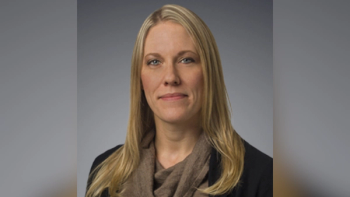
In this Q&A, Cheryl Kole, vice president of solution strategy and commercialization at Almac Clinical Technologies, examines what it takes to build and sustain a clinical trial technology infrastructure that can keep pace with increasingly complex study designs.

Behavioral Science in Clinical Trials: Part 2 — How Patient and Site Experience Shapes Trial Success
In part 2 of this three-part series, behavioral science and service design reveal how poor experiences with confusing information, unreliable technology, and inefficient processes drive site disengagement and patient dropout, and how measuring these experiences early enables practical, evidence-based solutions.
In this video interview, Cheryl Kole, vice president of solution strategy and commercialization at Almac Clinical Technologies, offers a framework for thinking about which emerging trial complexities deserve to be built into core technology platforms and which are better managed as bespoke, one-off configurations.
In this video interview, Cheryl Kole, vice president of solution strategy and commercialization at Almac Clinical Technologies, makes the case that intuitive, easy-to-navigate technology directly reduces errors, improves site compliance, and prevents the workarounds that quietly undermine study performance.

As clinical trials grow more complex, the technology infrastructure supporting them is under renewed scrutiny. Across data validation, AI adoption, and site-based systems, 2026 is shaping up as a year of implementation rather than experimentation.
In this video interview, Cheryl Kole, vice president of solution strategy and commercialization at Almac Clinical Technologies, discusses why sponsors must integrate their digital and physical supply chains as a single operational flow and how to build the in-house capabilities and partner relationships needed to manage that complexity effectively.
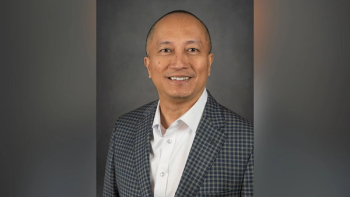
Sample integrity and traceability often fail not because of science but because clinical trials rely on manual processes and fragmented systems that obscure problems until samples are already compromised.
Advertisement
Advertisement
Trending on Applied Clinical Trials Online
1
The Oncology Trial Has Changed, Has IRB Oversight Kept Up?
2
Q3 Healthcare Report Cites Federal Research Cuts and FDA Staff Losses as Pressures on Biotech
3
The Next Evolution of Patient-Centered Trials Starts with Design
4
ACT Brief: AI Trial Matching Access, IRB Oncology Expertise, and Livsayis Myasthenia Gravis Approval
5