




Patient Participation
Latest News

Operationalizing the Patient Voice: Converging U.S., EU, and UK Requirements and the Role of Real-World Patient-Reported Data
By Julie Ross

From Participation to Understanding: Reframing Engagement in Clinical Trials
By Aubrey Verna
Advertisement
Advertisement
Accelerating patient recruitment: Connecting the right patients to the right trial
Discover how Quest Diagnostics puts its vast database of lab results to work and leverages patient and physician credibility to efficiently and effectively connect the best-fit patients to the clinical trials that will benefit from their participation.
Revitalizing recruitment in a lupus rescue study
A collaborative approach by Quest Diagnostics and PatientsLikeMe
5 Essential Capabilities for Decentralized Clinical Trials
Decentralized clinical trials are positioned as a foundational competency as clinical research continues shifting toward broader access and real-world evidence generation.
6 Ways Lab Data Can Improve Clinical Trials
Discover how Quest Diagnostics’ comprehensive lab data can elevate your clinical trials.
Latest Videos







Shorts

0:37
Why Patient Voice Matters in Clinical Trials
8 days ago
by
Amélie Lothe(+1 more)
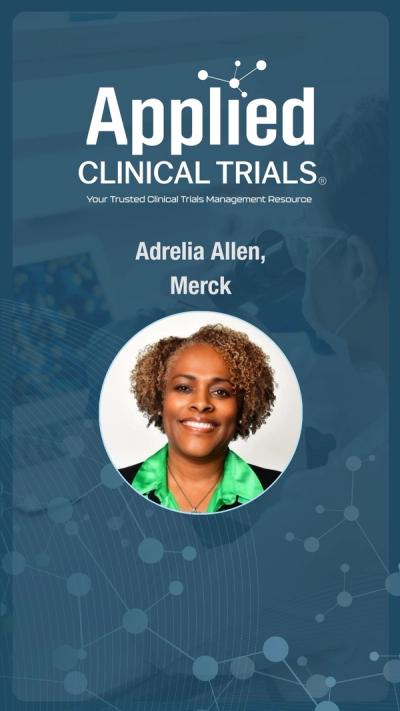
0:45
Embedding Diversity into Clinical Research
4 months ago
by
Adrelia Allen
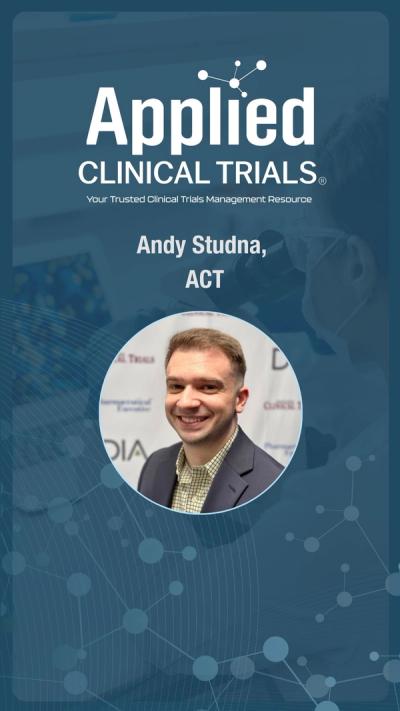
1:27
ACT Ops Take: Modernizing Participant Payments for Clinical Trial Success
5 months ago
by
Andy Studna, Senior Editor
0:58
Can AI Predict Health Issues?
5 months ago
by
Mohammed Saeed, MD, PhD(+1 more)
0:34
What 'Authentic Community Engagement' Actually Means
6 months ago
by
Del Smith, PhD(+1 more)
0:45
Why the Shift to Patient-Centric Clinical Trials is Crucial
7 months ago
by
Miriam Dervan

0:58
Can AI Predict Patient Success in Clinical Trials?
9 months ago
by
Dominique Demolle(+1 more)
0:36
A Time for Change: Clinical Trials Must Become a Care Option
10 months ago
by
Iddo Peleg (+1 more)
0:33
How a Unified Trial Platform Can Change Patient Care
a year ago
by
Adrianne Rivard(+1 more)
Advertisement
More News
Advertisement

Static budgeting models and one-size-fits-all fair market value approaches create visibility gaps around inflation and true site costs, but regional frameworks, standardized costing toolkits, and accountability metrics can rebuild trust and replace defensive negotiations with transparency.

Biomarker-informed trial enrollment appears straightforward for identifying responders and optimizing efficiency, but failures to account for demographic variation in cut-off selection, causality versus correlation, and composite biomarker complexity risk excluding viable patients and exacerbating disparities.

From point-of-care sample collection to real-world data curation, wearable device integration, and continuous review infrastructure, data quality is not a single problem in clinical trials—it is a layered challenge that manifests differently at every stage of development and demands a different set of solutions at each one.

Under-enrollment isn't news to teams running oncology trials, and the instinct is to spend more on reach. The evidence, however, says the biggest leak is something else entirely and that most recruitment budgets focus on the least valuable part of the problem.

Consumer-grade wearables offer promise for reducing trial burden and improving engagement, but accuracy and reliability vary substantially by device, measurement, and population, requiring rigorous fit-for-purpose validation and careful endpoint selection before integration into regulated research.

Sponsored
A sponsor faced recruitment roadblocks for a Phase II oncology clinical trial. The solution: Citeline PatientMatch, leveraging RWD and natural language processing for optimal site and patient selection.

Sponsored
A sponsor faced recruitment roadblocks for a Phase II oncology clinical trial. The solution: Citeline PatientMatch, leveraging RWD and natural language processing for optimal site and patient selection.
Sponsored
Small patient pools, strict I/E criteria, and delayed diagnosis plague rare disease recruitment. Alerting patients about trials, seeking their input, and building trust are ways to boost recruitment.

Sponsored
Recruitment is moving from site-first to patient-first models. Gain insights into the role RWD plays, data-driven patient identification, and overcoming bottlenecks with more targeted strategies.

In this Q&A, Rob DiCicco, vice president of portfolio management at TransCelerate Biopharma, discusses the collaborative work underway with FDA and CTTI to explore selective safety data collection as a model for de-risking trial design, reducing site and patient burden, and scaling pragmatic trial approaches across the industry.
Advertisement

The evolving role of medical affairs in connecting patients, physicians, and evidence generation.

Eligibility criteria alone rarely predict enrollment, which depends more on trust, hope, and fear, requiring relationship-based community engagement paired with behavioral readiness assessments rather than transactional outreach.

In this Q&A, Liz Beatty, co-founder and chief strategy officer at Inato, discusses how real-time patient data is reducing non-enrolling sites, why sponsor-specific technology remains the biggest barrier to adoption, and what a shift toward cross-asset site partnerships could mean for enrollment efficiency.

When clinical trial teams screen for "tech-savvy, engaged" participants, they're often running a second, unwritten eligibility criterion that systematically excludes the populations the study drug is actually meant to treat.

From real-time evidence generation to federated AI to site-level data integration, ACT spoke with seven experts at DIA 2026 on the trends and challenges defining clinical trial operations today.

Outdated payment methods like prepaid cards and checks create administrative burden and retention friction, but modern flexible payment platforms with multiple payout options and global reach can improve participant experience without adding compliance complexity.

From planning one Phase III trial at a time to digital standardization on repeat.
Patient Engagement Strategies in Anti-Obesity Medication Clinical Trials: Addressing Drop Out Rate and Improving Retention

In this Q&A, Del Smith, PhD, CEO and co-founder of Acclinate, discusses how structural and relational barriers continue to limit participation from underrepresented communities in clinical trials—and what it takes to build the kind of trust that translates into lasting research impact.

Despite political headwinds, life sciences leaders are holding their ground on DEI, but translating organizational commitment into representative enrollment requires structural changes to protocol design, site selection, and community engagement that most of the industry has yet to fully make.

In this video interview, Sam Hinsley, statistics manager at Phastar, reflects on why she chose a career in clinical trials and what it means to do work that she believes makes a genuine difference.
In this conversation between Rebecca Johnson, PhD, ACT EAB member and clinical research recruitment and inclusion executive and strategist; and Adrelia Allen, executive director of clinical trial patient diversity at Merck, Allen describes how improving representation has changed trial design and site selection at Merck, where the hardest barriers remain, and what the industry will need to sustain meaningful progress over the next five years.

Participant adherence depends on readiness—a combination of knowledge, calibrated confidence, and real-world mastery—not simply on digital tools, reminders, or education, which are forms of exposure rather than preparation for sustained performance.
In this conversation between Rebecca Johnson, PhD, ACT EAB member and clinical research recruitment and inclusion executive and strategist; and Adrelia Allen, executive director of clinical trial patient diversity at Merck, Allen explains how Let's Talk Trials was designed to address gaps in clinical trial awareness and access, what differentiates it from earlier efforts, and how trust sits at the center of the initiative's approach.
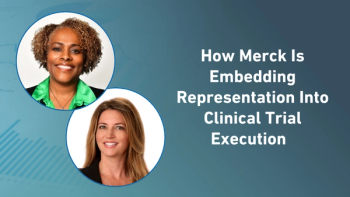
In this conversation between Rebecca Johnson, PhD, ACT EAB member and clinical research recruitment and inclusion executive and strategist; and Adrelia Allen, executive director of clinical trial patient diversity at Merck, Allen discusses how diversity in clinical trials has become embedded in how Merck designs and executes its studies, and what accountability looks like internally across trial planning and community engagement.
Advertisement
Advertisement
Trending on Applied Clinical Trials Online
1
Lessons from Hundreds of Clinical Trials: AI’s Successes, Gaps, and Opportunities
2
The Execution Gap: Why Clinical Trial Infrastructure Has to Be Built Before AI Can Deliver
3
Benchmarking Study Finds Clinical Trial Performance Is Shaped by Operating Model Design, Not Sourcing Strategy
4
What "Patient Voice" Actually Requires: Beyond the Buzzword
5