

Learn how sponsors and CROs are adapting to evolving ICH GCP requirements while maintaining innovation in high-touch areas, ensuring patient protection, and preserving data integrity across global clinical trials.
Learn how sponsors and CROs are adapting to evolving ICH GCP requirements while maintaining innovation in high-touch areas, ensuring patient protection, and preserving data integrity across global clinical trials.

AI-driven discovery, EHR-based real-world evidence, and synthetic patient modeling are rapidly reshaping drug repurposing, reducing development timelines, expanding therapeutic applications, and accelerating regulatory acceptance of computational approaches.
In today’s ACT Brief, we look at what’s fueling rapid growth in CNS and autoimmune research, why former FDA leaders are warning that new vaccine policies could reshape clinical development, and how the agency’s latest leadership change may influence drug review operations.
Investigate how sponsors are responding to rapid growth in obesity drug development, including strategies for manufacturing, supply chain optimization, dosing innovations, and combination therapies to meet market and patient needs.

Twelve former FDA leaders have publicly challenged the agency’s proposed overhaul of vaccine approvals, sparked by an internal memo linking child deaths to COVID-19 vaccination, arguing the changes threaten evidence-based standards, weaken immunobridging practices, and risk eroding public trust.
In today’s ACT Brief, we look at new insights on strategy-driven clinical development, fresh survey data revealing persistent site startup delays, and major leadership turnover inside FDA’s drug division.
Explore the drivers behind increased investment in CNS and autoimmune trials, including pain, mental health, and inflammatory conditions, and see how technology, decentralized trials, and hybrid designs are shaping study operations.

ICON’s June 2025 survey of more than 100 investigators and site leaders reveals persistent bottlenecks in study startup driven by contract and budget delays, slow activation timelines, and insufficient collaboration from sponsors and CROs.
Examine the rise of personalized and biomarker-driven therapies, the logistical challenges of rare patient populations, and how historical controls and real-world evidence are supporting strategy-driven trial designs.
In today’s ACT Brief, we look at the FDA’s deployment of an agency-wide agentic AI platform, review new data showing how structured exercise programs can improve long COVID symptoms, and explore how PROs and real-world evidence are reshaping how industry measures treatment impact.
The FDA has introduced a secure, agency-wide agentic AI system to support complex regulatory workflows—enhancing reviews, surveillance, and inspections—while maintaining strict data protections and human oversight.
In today’s ACT Brief, we examine how the FDA’s CNPV Program is reshaping operational planning and accelerated submission readiness, review the FDA’s accelerated approval of Voyxact for IgA nephropathy, and explore new insights from the Veeva R&D and Quality Summit on modernizing clinical reference data management.
Explore the challenges sponsors and CROs face in maintaining clinical reference data, uncover the hidden costs of traditional upkeep models, and see how integrated data solutions can streamline operations across the clinical ecosystem.

The FDA has granted accelerated approval to Otsuka’s Voyxact for adults with primary IgAN at risk of disease progression, based on Phase III VISIONARY trial results showing a 51% reduction in proteinuria at nine months and a generally well-tolerated safety profile, offering the first targeted APRIL-blocking therapy for this patient population.

In this Q&A, John Kirk, principal regulatory strategist at Veristat, explains how the FDA’s Commissioner’s National Priority Voucher (CNPV) Program is accelerating operational timelines, tightening cross-functional workflows, and redefining what sponsors and CROs must deliver to secure and execute an ultra-compressed one-to-two-month review.
In today’s ACT Brief, we examine how the CRA role is transforming alongside modern clinical trial technology, review the FDA’s approval of Imfinzi plus FLOT as the first immunotherapy regimen for resectable gastric and GEJ cancers, and look at Novo Nordisk’s fast-tracked submission of its higher-dose Wegovy injectable under the Commissioner’s Priority Review Program.

The company submitted the new dosage for approval based on its Phase III trial results.

The approval of AstraZeneca’s Imfinzi in combination with perioperative FLOT chemotherapy marks the first immunotherapy regimen for resectable gastric and gastroesophageal junction cancers, delivering a 22% overall survival benefit and establishing a new standard of care.

As clinical trials become more complex and decentralized, the role of the CRA is evolving from site monitor to strategic, digitally fluent partner, requiring expertise in hybrid oversight, risk-based monitoring, and multi-system data management.
In today’s ACT Brief, we examine how AI is being integrated into administrative workflows at investigative sites, highlight the FDA’s approval of the first gene therapy for adolescents and adults with SMA, and explore strategies for pharmaceutical companies to build high-performing hospital-based clinical trial programs.

FDA approval of Itvisma, the first gene replacement therapy for adolescents, teens, and adults with SMA, is backed by Phase III data showing meaningful gains in motor function and a consistent safety profile across previously untreated and previously treated patients.

As AI adoption accelerates across clinical research, clear distinctions between AI agents, AI teammates, and integrated intelligence are essential for understanding how automation will reshape site operations, workforce roles, and end-to-end study processes.
In today’s ACT Brief, we examine how AI and functional service partners are reshaping global pharmacovigilance, look at new data on how investigative sites are investing in and integrating digital solutions, and explore how Trialbee assesses ROI across emerging multi-touch recruitment platforms.

AI-enabled automation is rapidly moving into routine pharmacovigilance operations, streamlining case intake and processing, reducing longstanding adoption barriers, and driving new efficiencies as sponsors and functional service provider partners scale safety workflows.

A new global Tufts CSDD survey of 387 investigative site professionals reveals broad experience with digital and decentralized trial tools, growing site-driven technology investments, and strong support for remote data collection—while highlighting persistent burdens tied to fragmented systems, training demands, and financial strain.

How pharma–hospital partnerships can overcome operational, financial, and organizational barriers to build high-performing clinical trial programs that expand access, accelerate accrual, and strengthen research capacity across both academic and community settings.

Explore methods to evaluate recruitment performance across multiple platforms, including engagement tracking, conversion analysis, and data-driven optimization for emerging digital spaces.

New 48-week results from the Phase IIIb APEX trial show Tremfya delivers sustained radiographic protection and deeper clinical responses in active psoriatic arthritis, reinforcing its potential as an early, structural-sparing therapy.

Examine real-world examples of patient engagement through less conventional channels and see how targeted campaigns can reach high-quality participants even in low-volume or emerging platforms.
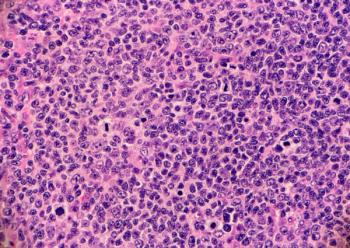
Epkinly plus rituximab and lenalidomide is the first bispecific antibody combination FDA-approved for relapsed or refractory follicular lymphoma, backed by Phase III data showing substantially improved disease control over standard therapy.