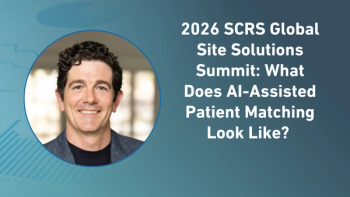
Trially CEO Kyle McAllister explains why transparent AI reasoning is essential for trial patient matching.
Trially Co-founder and CEO Kyle McAllister, explains how AI absorbing the bulk of clinical-trial chart reviews can free research sites to focus staff time on higher-value tasks.
Kyle McAllister, co-founder and CEO, Trially, explains that under tight research preassure, the smaller, less visible tasks at the site level are the first to fall through the cracks.
He notes that clinical research coordinators are compensated for specific, high-value patient visits, and that this is also the work they’re most motivated to do, naturally pulling their attention away from essential but less recognized tasks like direct outreach to potentially interested patients. Keeping the recruiting engine running, he says, requires following up on leads from clinic visits and sponsor-placed ads and actually moving those people through a recruiting funnel, work that competes poorly against higher-dollar visits.
McAllister argues this gap is exactly where AI is already proving its value. He describes a familiar scenario among customers: a hospital system with twenty research assistants spending their full-time job reading patient charts to identify trial candidates, work he says AI can take over or offset by roughly 80%.
He applies the same logic to early-stage outreach, such as simply verifying whether a patient’s phone number is valid, arguing staff shouldn’t waste time on that first layer of contact. Instead, AI should handle vetting and pre-qualification, handing off a ready patient to staff for the more meaningful conversation. McAllister contrasts this with the common “human in the loop” framing, describing Trially’s approach instead as “human in the lead,” deliberately positioning people at the most important, relationship-driven points in the process rather than throughout it.