Commentary|Videos|September 5, 2025

How AI Helps Physicians Match Patients to Trials Faster

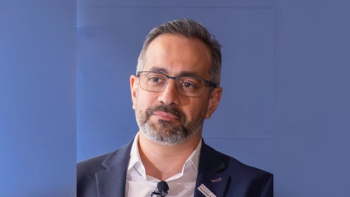
In this video interview, Adrianne Rivard, senior community development manager at myTomorrows, explains how AI can reduce the time physicians spend pre-screening patients for clinical trial eligibility.

In a recent video interview with Applied Clinical Trials, Adrianne Rivard, senior community development manager, myTomorrows, discussed the challenges physicians face in identifying clinical trials. Highlighting insights from a recent myTomorrows report on the need to streamline clinical operations, Rivard touched on the use of artificial intelligence (AI) to streamline pre-screening, which can reduce the need for multiple databases. She also discussed how AI tools are gaining use, necessitating compliance with data privacy standards and ongoing education to build trust among physicians.

ACT: With 72% of physicians saying that clinical trial searches are too time-consuming, how can clinical operations teams better support HCPs in identifying eligible trials for their patients?

Rivard: That's a great place to start. To give a bit of context, I'm on the medical community team at myTomorrows, which is a global health tech company that connects patients with pre-approval treatment options. Considering that there are 500,000 clinical trials registered globally, you can imagine that the pre-screening process for these patients, for these pre-approval options, is super time consuming. It's manual, it's complex, and this is putting a lot of burden on physicians. To better understand those challenges and to really dig in a little bit deeper, we surveyed 100 US-based physicians across many different specialties. One of the main takeaways was that we really need to reduce the amount of time and effort that physicians are spending and pre-screening patients and really trying to identify relevant options for their patients. I think one of the ways to do this is by adopting the use of AI, which is what we do at myTomorrows.

Related to this article

© Grispb - © Grispb - stock.adobe.com
Mistral and OpenAI produced identical overall eligibility labels across 200 synthetic patient-study assessments, with criterion-level disagreements concentrated in inclusion criteria where models switch between “Uncertain” and “Not included” when records lack sufficient evidence, so model choice should be driven by deployment architecture, control, and cost rather than assumed interchangeability.
The Human Side of Clinical Trials: Before Burden Becomes Risk, Capturing Friction in Real Time
In Episode 4 of The Human Side of Clinical Trials, host Brian S. McGowan, PhD, FACEHP, chief learning officer and co-founder of ArcheMedX, Inc., speaks with Jason Riis, PhD, CEO and chief behavioral scientist at Behavioralize, about how capturing friction closer to the moment it happens can reveal unclear instructions, technology friction, and workarounds that retrospective surveys and debriefs tend to miss.