Commentary|Videos|April 27, 2026

The Promise and Reality of AI in Protocol Development

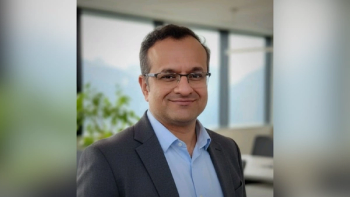
In this video interview, Mark Freitas, managing director and life sciences practice lead at Alvarez & Marsal, offers a measured look at where AI is genuinely accelerating upstream protocol work and why proof points of faster approvals reaching patients are still limited.

Full interview summary

In a recent video interview with Applied Clinical Trials, Mark Freitas, managing director and life sciences practice lead at Alvarez & Marsal, discussed how clinical trial design has evolved beyond methodology into a far more consequential strategic discipline, particularly for small and midsize biopharmaceutical companies navigating constrained capital environments. He opened by reframing the most significant shift in trial design not as a matter of new tools or techniques, but as a question of who is making design decisions and whether leadership fully understands the downstream consequences. Drawing on an analysis of 200 FDA complete response letters, he noted that the delays driving those outcomes were largely operational rather than scientific, and that board and C-suite engagement in early design decisions remains critically underutilized.

Freitas then addressed the unique pressures facing sponsors in crowded therapeutic areas like obesity and oncology, where competitive differentiation, IP timelines, and the pace of mechanism innovation have made trial design inseparable from business strategy. With roughly 300 obesity drugs in development and oncology pipelines growing increasingly fragmented by tumor type, smaller companies cannot afford the multi-pronged evidence generation strategies available to big pharma and must make high-stakes bets with limited margin for error.

He made a compelling case for integrating reimbursement probability into the standard PTRs framework earlier in development, pointing to cases where drugs reached approval but failed commercially because the value story could not support formulary placement. On AI and advanced analytics, Freitas offered a measured perspective, acknowledging real upstream acceleration while cautioning that proof points of faster approvals reaching patients remain limited, and that the divide between big pharma infrastructure investment and smaller company agility will shape how those gains are distributed.

He closed by identifying governance and review cycle inertia as the most underappreciated execution risk in an AI-accelerated environment, arguing that the process of acting on faster insights has not kept pace with the speed at which those insights are now generated.


Related to this article

Why Seizure Counts Alone Can't Define Success in Epilepsy Trials
In this video interview, Amélie Lothe, global medical community head for rare epilepsies at UCB Pharma, explains why the full burden of developmental and epileptic encephalopathies extends far beyond clinical symptoms—and why endpoints must reflect what families are actually hoping for.
Recruitment in the Age of AI: Q&A with John Worden, Javara
In this Q&A, John Worden, chief commercial officer at Javara, discusses why clinical trial recruitment has remained stubbornly one-size-fits-all, how AI can identify patients at scale without displacing the clinician relationships that drive trust, and what care-integrated research engagement needs to look like for health systems, sponsors, and sites.
What It Actually Means to Embed the Patient Voice in Trial Design
In this video interview, Amélie Lothe, global medical community head for rare epilepsies at UCB Pharma, explains why genuine patient partnership begins before the protocol is written—and what it looks like when patients and caregivers tell you a trial was designed with them in mind.