Commentary|Videos|August 10, 2026

How to Tell Substance from Branding in Biotech's Support Ecosystem

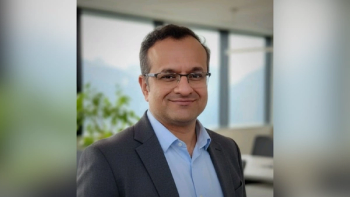
In this video interview, Stella K. Vnook, PhD, CEO of Kaida BioPharma and founder of Aviva Ventures, offers a frank breakdown of incubators, accelerators, and venture studios—and why biotechs need to ask harder questions about track records and exits before committing to any of them.

Full interview summary

In a recent video interview with Applied Clinical Trials, Stella K. Vnook, PhD, CEO and executive chair of Kaida BioPharma and founder and CEO of Aviva Ventures, discussed how the current funding environment is reshaping clinical development priorities across early-stage and rare disease programs. She opened by describing a trifecta of pressures converging on the field: declining NIH funding for early programs, large pharma's shift toward later-stage asset acquisition, and a global operating environment that is forcing sponsors to move faster and more capital-efficiently toward proof-of-concept data. The result, she noted, is a field that has moved away from exploratory science toward a discipline of speed, rigor, and inflection-point focus.

On risk, Vnook was candid that scientific failure remains an unchanging constant, but argued that the more urgent and underappreciated risk right now is the funding gap between early-stage programs and the later-stage capital that large pharma is seeking. Assets with genuine potential are at risk of never reaching their inflection points simply because the infrastructure to get them there no longer exists in the same way. She also pointed to indication selection and trial design trade-offs as persistently consequential decisions where even strong assets can go wrong.

She described commercialization readiness as increasingly inseparable from early clinical strategy, noting that the end-of-phase-two timing that has historically governed those conversations is too late. The right surveys, the right commercial consultants, and an early understanding of how a product will be prescribed and covered are now foundational inputs to trial design—not afterthoughts. And on the question of lean development models, she pushed back on the conflation of "lean" with "under-resourced," arguing instead that fractional teaming and strategic partnerships, rather than early full-time hiring, represent a more disciplined and effective approach to capital allocation.

Vnook closed by addressing the ecosystem of support available to biotechs today, offering a pointed taxonomy of incubators, accelerators, and venture studios and urging founders to ask hard questions about track records and exits before assuming that a label carries substance.

Related to this article

The Human Side of Clinical Trials: How Measuring Readiness at Training Predicts Trial Risk Before It Shows Up in the Data
This episode of The Human Side of Clinical Trials, hosted by Brian S. McGowan, PhD, FACEHP, chief learning officer and co-founder of ArcheMedX, Inc., and Kelly Ritch, chief operating officer of ArcheMedX, Inc., explores why training completion metrics like attendance and quiz scores fail to capture true study readiness, and how measuring both competence and confidence can reveal trial risks before enrollment even begins.
What the Epilepsy Community Has Taught Us About Trial Feasibility
In this video interview, Amélie Lothe, global medical community head for rare epilepsies at UCB Pharma, shares what she has learned firsthand from families living with Dravet syndrome and CDKL5 deficiency disorder about what makes trial participation possible—and what makes it not.
Why Seizure Counts Alone Can't Define Success in Epilepsy Trials
In this video interview, Amélie Lothe, global medical community head for rare epilepsies at UCB Pharma, explains why the full burden of developmental and epileptic encephalopathies extends far beyond clinical symptoms—and why endpoints must reflect what families are actually hoping for.