

Applied Clinical Trials
It's out with the old, in with the new for clinical development.
Applied Clinical Trials
It's out with the old, in with the new for clinical development.

Applied Clinical Trials
With its vast pool of patients and well-trained, English-speaking investigators, what exists to take advantage of in this research-rich country is clear. What needs to be given back, however, is not so clear. Despite the uncertainty, one thing seems evident: Responsibility is key to giving back.

Applied Clinical Trials
While not a panacea, pharmacogenomics is still a valuable trial tool that can make the recruitment process more efficient and eliminate the high costs associated with late-stage product failure.

Applied Clinical Trials
India continues to gain the attention of pharmaceutical companies looking for a place to conduct clinical trials because of the country's reputation for fast subject recruitment rates. But as Jane Barrett reveals, sometimes the country's clinical trial participants are more uninformed than informed.

Applied Clinical Trials
There are a number of factors potential subjects need to consider when deciding whether to participate in a clinical trial, including an often overlooked matter that this month's authors examine: taxes.

Applied Clinical Trials
A discussion of the recent initiatives for applying advanced technologies in real world settings that have the capability to improve drug research, increase subject safety, and reduce development costs, which takes into account the collaborative efforts among government, academia, industry, and patient groups that are necessary to achieve these goals and translate new technological discoveries into clinical practice.

Applied Clinical Trials
A patient's agreement to take part in a clinical trial is a legal contract, which consumer law requires to be expressed in plain language.

Applied Clinical Trials
Right now the industry has a chance to reclaim its good name and recapture the public's respect for the power of what it can do.

Applied Clinical Trials
Rethinking the current pharmaceutical model

Applied Clinical Trials
A growing number of sponsors and regulators are recognizing that accredited organizations are more likely to be compliant.

Applied Clinical Trials
Personal integrity is what we need to insist on as the finality of good clinical practice.

Applied Clinical Trials
Today's technology makes significant improvements in trial safety systems possible.

Applied Clinical Trials
Closing Thoughts on the state of clinical trials in India today.

Applied Clinical Trials
Despite requirements for consent forms at lower grade levels, evaluation studies find little or no improvement in understanding.

Applied Clinical Trials
Making important data more consistent and more accessible has the potential to improve safety and efficacy.

Applied Clinical Trials
Thoughtful application of eDiaries can make clinical development much more efficient.

Applied Clinical Trials
The FDA Initiative represents the challenge facing our industry.

Applied Clinical Trials
The clinical trial industry can thrive by offering easy-to-use technology to make data available earlier.

Applied Clinical Trials
Even with current trial management systems, steps can be taken right now to greatly increase efficiency.

Applied Clinical Trials
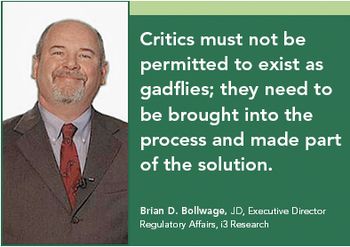
As laudable as it may appear to be, the Critical Path Initiative will create as many problems as it solves.

Applied Clinical Trials
Much has been written about the staggering costs of drug development and how the low Phase III success rates across the pharma industry have contributed to these costs. While safety outcomes explain many failures during the early development phase and have likewise played a prominent role in some highly publicized product withdrawals, efficacy failures in Phase III have received little attention. What we now know, however, is that a significant number of Phase III failures are attributable neither to issues of safety nor product differentiation, but to an inability to confirm efficacy against placebo.

Applied Clinical Trials
The Food and Drug Administration's (FDA) Critical Path Initiative and subsequent guidance documents have sparked the revitalization of the life sciences industry.
Applied Clinical Trials
FDA's Critical Path Initiative is an excellent idea, but is the time right?
Applied Clinical Trials
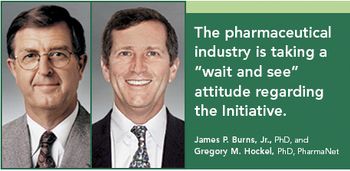
Ambitious in scale and scope, the Critical Path Initiative provides a rational construct for framing the central paradox of today's new drug and new device development industry.
Applied Clinical Trials
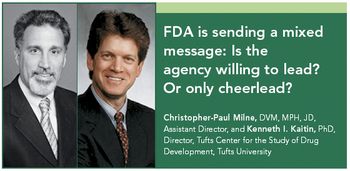
The Critical Path Initiative (CPI), as it has come to be called, provided the FDA's analysis of the current drug development pipeline problem, characterized by a recent slowdown-instead of the expected acceleration-in innovative medical therapies reaching patients.
Applied Clinical Trials
In March 2004, FDA issued a provocative white paper: Innovation and Stagnation-Challenge and Opportunity on the Critical Path to New Medical Products. The Critical Path was identified by FDA as those parts of the R&D continuum that constitute bottlenecks in the drug development process.
Applied Clinical Trials
Scientific discovery is, by its very nature, plagued by a lag between concept development and the acquisition of the tools necessary to fully explore a new technology's application.
Applied Clinical Trials
When the FDA stated that "the applied sciences needed for medical product development have not kept pace with the tremendous advances in the basic sciences" everyone seemed to agree.

Applied Clinical Trials
Following the model of the home health care industry might be the answer to high subject dropout rates in clinical trials.

Applied Clinical Trials
Clinical departments are very expensive to run and maintain.