

Applied Clinical Trials
Through new pediatric networks, the EU hopes to improve clinical research in children.
Applied Clinical Trials
Through new pediatric networks, the EU hopes to improve clinical research in children.
Applied Clinical Trials
Improvements in data quality and data capture and reduced workload for sponsors and sites are evident.

Applied Clinical Trials
How the ability to apply text mining and signal detection algorithms to social media's real-time data provides unheard of value.

Applied Clinical Trials
The once recession-proof industry must now seek out opportunities to defend itself from potential downfalls.

Applied Clinical Trials
Alleviating clinical trial costs in two pivotal areas with the use of collaborative technology.

Applied Clinical Trials
A look at how the current financial crisis has established more opportunity for the contract research organization industry.

Applied Clinical Trials
Using predictive modeling to combat the challenges of study enrollment.

Applied Clinical Trials
With so much depending on accurate data, taking a do-it-yourself approach to scoring can be risky.

Applied Clinical Trials
Developing and utilizing a comprehensive feasibility strategy to avoid risk and ensure the most efficient clinical trial.

Applied Clinical Trials
A clinical trials professional with personal experience as a trial subject discusses the purpose and importance of following protocol.

Applied Clinical Trials
Ways to ensure the transition between vendors is as smooth as possible for everyone involved.

Applied Clinical Trials
As patient recruiters and sponsors face low recruitment numbers, they must look beyond global trials to find a solution.

Applied Clinical Trials
The need for collaboration between the various disciplines and stakeholders is becoming crucial.

Applied Clinical Trials
A purely empirical approach to drug development may allow for evaluation of the overt factors that impact the balance of benefit and risk, but it will never uncover all potential scenarios for which companies are now being held accountable.

Applied Clinical Trials
Finding new ways to design and conduct clinical trials in order to prevent Phase III failures.

Applied Clinical Trials
REMS are new only in name. The basic concept has long been central to drug regulation.


Applied Clinical Trials
Chris Bode, PhD, vice president of corporate development for Absorption Systems, explains the impact of in vitro models relative to the Critical Path Initiative.

Applied Clinical Trials
Norbert Clemens, MD, head of clinical development for CRS Clinical Research Services, explains that EDC is more than just technology; it is indeed the new way of thinking about clinical research.

Applied Clinical Trials
Dr. Steve Dodsworth, director of molecular genetic services for Tepnel Research Products & Services, assesses that with molecular insight comes the opportunity to counter disease development and progression.

Applied Clinical Trials
Carl Anderson, senior consultant for Biologics Consulting Group, addresses the frequent overuse of Notes to File and concludes that documenting a mistake means absolutely nothing during an FDA inspection.

Applied Clinical Trials
Dan McDonald, vice president of business development for Excel Life Sciences, assesses the role of Site Management Organizations (SMOs) in India and discusses their contributions, which include GCP training and assistance for investigators.

Applied Clinical Trials
Saul Shiffman, cofounder and chief scientific officer of invivodata, Inc., examines how patient-reported data collection has been transformed since 1987.

Applied Clinical Trials
Matt Kibby, leader of global operations for BBK Worldwide, discusses why country study managers hold the key to global enrollment success but are afraid to use it.
Applied Clinical Trials
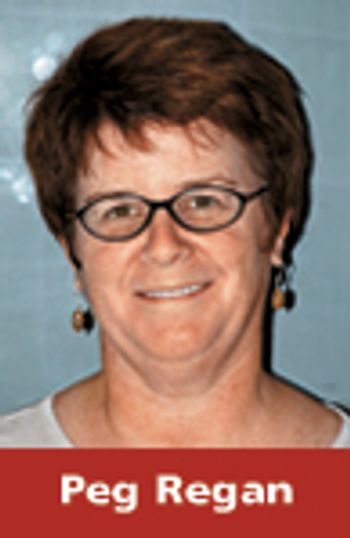
To capitalize on technology, a new approach to managing data is needed. Peg Regan, chief executive officer for PharmaPros Corporation, explains the concept of Electronic Data Lifecycle Management and how it will improve the quality of data and the time it takes to access it.
Applied Clinical Trials
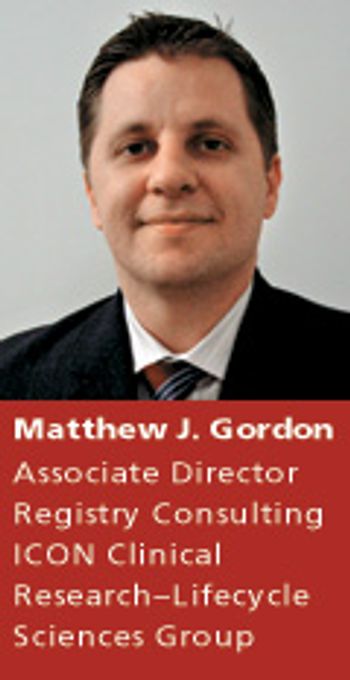
Why strategy is the cornerstone of success: Clearly establishing a registry's strategic purpose can save both time and money, eliminating the collection of extraneous data as well as the added burden it spawns.

Applied Clinical Trials
How a good plan and hot lunch can spell success for sponsors. Attention to detail can help boost dwindling subject enrollment and retention, saving both time and money.
Applied Clinical Trials
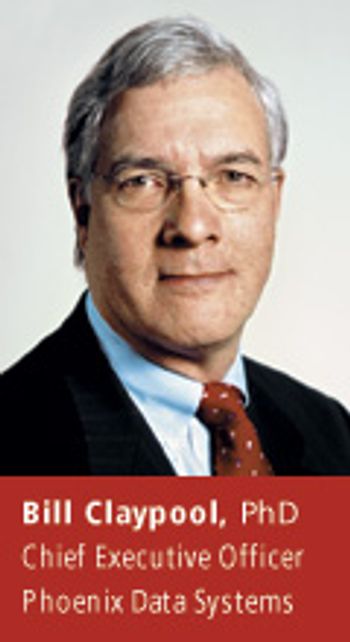
New alternatives for e-clinical and data management. As EDC becomes more widely used in clinical trials, sponsors are not limited to one option but rather can choose different routes to optimize EDC efficiency.

Applied Clinical Trials
Five-module architecture organizes massive amounts of information included in a marketing submission.

Applied Clinical Trials
When it comes to readability, do as the Feds say and not as they do. Federal agencies may recommend that consent forms be written on a junior high school level, but it's a daunting task even for them.