



Artificial Intelligence/Machine Learning
Latest News
Advertisement
Latest Videos
Advertisement
More News
Advertisement
Pharma modernization initiatives stall not from lack of ambition but from expanding governance layers that distance leadership from execution, slowing decision velocity and delaying the systems integration that drives competitive advantage.
In this video interview, Krishna Cheriath, vice president and head of clinical research digital data and AI at Thermo Fisher Scientific, explains how AI is being applied to case intake today and why successful adoption depends less on technology than on reimagining workflows and investing in workforce upskilling.

As clinical trials grow more complex, the technology infrastructure supporting them is under renewed scrutiny. Across data validation, AI adoption, and site-based systems, 2026 is shaping up as a year of implementation rather than experimentation.
In this Q&A, Mohammed Saeed, MD, PhD, chief medical officer at Solera Health, explores how wearable devices and continuous remote monitoring are reshaping clinical oversight, from early intervention to AI-driven pattern detection.
In this video interview, Mohammed Saeed, MD, PhD, chief medical officer of Solera Health, explores how AI models capable of analyzing continuous wearable data streams alongside broader patient information could detect subtle warning signs of deterioration that no clinician could identify alone.

Why rigorous testing and validation matter more than ever.
In this video interview, Marc Buyse, ScD, founder and CEO of IDDI, examines the most common threats to trial data reliability, including opaque methodologies, synthetic controls, and the limits of AI-driven analysis, while making the case for explainable, transparent trial design.

Closing the gender gap in data science and tech requires tackling barriers at every stage, from early education through career advancement, while actively challenging the unconscious biases that continue to hold women back.
Jonathan Andrus, co-CEO of CRIO, discusses how governance across the data lifecycle, site-focused technology adoption, and scalable AI-enabled workflows will define operational readiness in 2026.

At SCOPE Summit 2026, site leaders shared how AI is transforming feasibility, patient identification, and enrollment strategies, enabling research sites to boost performance, strengthen sponsor relationships, and deliver more precise, patient-centered clinical trials.
Advertisement

As sponsors navigate rising complexity, AI adoption, and global scale, outsourcing strategies are shifting toward hybrid models, deeper CRO collaboration, and function-level flexibility to support execution in 2026.

Insights from SCOPE 2026 highlight the industry’s shift toward connected, data-centric clinical trial ecosystems, where digital protocols, shared data, and renewed scientific rigor are driving more efficient, interoperable, and patient-focused research.

Angela Zubel, chief development officer, Debiopharm, emphasizes that organizations willing to standardize data and adopt practical AI tools are already gaining efficiency, cost savings, and stronger real-time oversight across development programs.
Angela Zubel, chief development officer, Debiopharm, explains how AI-enabled site selection, patient allocation, and real-time data monitoring can reduce costs, shorten timelines, and limit inefficiencies caused by non-performing sites.
Angela Zubel, chief development officer, Debiopharm, discusses why 2026 marks a shift from AI pilots to broader operational implementation across clinical trials and drug development programs.
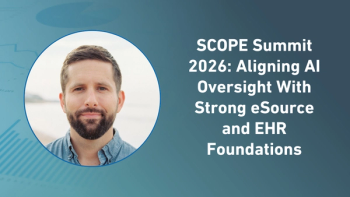
Mike Wenger, chief innovation officer at CRIO, explains how AI can responsibly support data quality and monitoring with proper oversight, and why advancing eSource and EHR systems remains critical to strengthening data integrity and remote trial operations.

Under a new strategic collaboration, Bristol Myers Squibb will deploy Evinova’s AI-native Study Designer platform to optimize trial design, improve decision-making, and drive efficiencies across its global clinical portfolio.
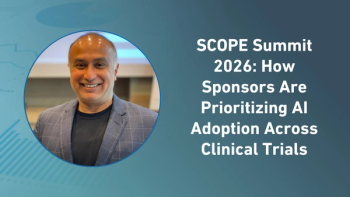
Raja Shankar, VP of machine learning at IQVIA, discusses which AI capabilities sponsors are most likely to adopt first to streamline trial workflows and reduce operational burden, while also highlighting emerging applications that could shape the next phase of clinical trial design.

As clinical trials grow more global and complex, AI is emerging as a practical enabler of smarter financial management by automating manual processes, improving visibility across fragmented systems, and helping sponsors, CROs, and sites reduce delays, errors, and operational friction.
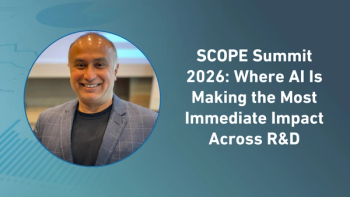
Raja Shankar, VP of machine learning at IQVIA, explains how AI-driven trial simulation and automation are beginning to influence decision-making across every phase of clinical development.

When a single pivotal trial can determine the fate of an entire program, success depends less on marginal gains in speed or cost and more on building robust, adaptive trial designs that actively manage uncertainty and protect the probability of a positive outcome.

The FDA and EMA have aligned on ten guiding principles for the responsible use of artificial intelligence across the drug development lifecycle, establishing a shared framework to support innovation, regulatory consistency, and patient safety.

A look at how efficiency, access, platformization, AI, non-traditional players, and regulatory recovery are expected to reshape clinical operations in 2026.
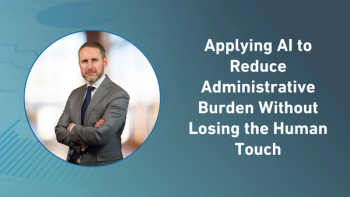
Examine how practical AI applications can streamline contracts and startup workflows while preserving the central role of investigators, site staff, and patient relationships in clinical research.
Explore how contract standardization, proactive budget alignment, and AI-enabled negotiation tools can reduce site activation delays and turn agreements into strategic accelerators rather than administrative bottlenecks.
Advertisement
Advertisement
Trending on Applied Clinical Trials Online
1
Lessons from Hundreds of Clinical Trials: AI’s Successes, Gaps, and Opportunities
2
The Execution Gap: Why Clinical Trial Infrastructure Has to Be Built Before AI Can Deliver
3
Benchmarking Study Finds Clinical Trial Performance Is Shaped by Operating Model Design, Not Sourcing Strategy
4
What "Patient Voice" Actually Requires: Beyond the Buzzword
5