



Artificial Intelligence/Machine Learning
Latest News
Advertisement
Latest Videos


Advertisement
More News
Advertisement

In a decentralized, digitally enabled clinical trial environment, conventional approaches to data analysis are evolving as sponsors utilize technological tools in new ways to ensure compliance with global standards, mitigate risk, and bring life-changing therapies to patients faster.
Exploring how large-scale patient databases and AI analytics can accelerate site activation, strengthen recruitment, and improve trial design from the start.

Thermo Fisher will integrate OpenAI APIs into its Accelerator Drug Development platform and clinical research business, while Lundbeck deploys ChatGPT across its global workforce to drive R&D and commercial innovation.

Addressing the imbalance in clinical trial workloads by empowering mid-level investigators and using AI to expand access to high-quality, diverse research leadership.
Examining how artificial intelligence can help identify true key opinion leaders in emerging markets to improve site influence, patient engagement, and trial success.
Highlighting how technology and mindset shifts can help expand breast cancer research leadership beyond high-income countries and build more inclusive global trial networks.

Medidata deepens its collaboration with Sanofi to advance AI-enabled clinical development, while BioRender joins forces with Anthropic to power visual communication within Claude for Life Sciences.

Revisit top insights from SCOPE Summit 2025, where industry leaders explored how artificial intelligence is reshaping trial risk management and how pragmatic study designs are bridging the gap between clinical research and real-world care.
How a unified approach to clinical data management, powered by artificial intelligence and advanced analytics, can elevate clinical trial monitoring and redefine how teams assess, act on and learn from data.
As pharma wrestles with whether to trust fully autonomous AI, semi-autonomous agents are emerging as a safer middle ground that reduces manual work, eliminates white space in clinical development, and accelerates trial timelines without compromising patient safety.
Advertisement
Examine strategies for validating, monitoring, and safely deploying configurable AI agents to ensure compliance and performance in clinical trials.

Take a closer look at how agentic AI can automate repetitive monitoring tasks while keeping human oversight central to critical decision-making in clinical research.
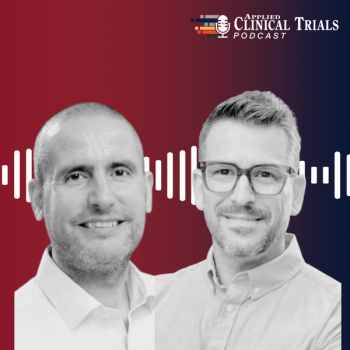
In this episode of the ACT Podcast, we highlight a recent Q&A featuring Ibrahim Kamstrup-Akkaoui, vice president of data systems innovation at Novo Nordisk; and a feature article by Chris Driver, senior director of product management, Patient Suite at IQVIA, in which they both highlight how sponsors are adopting automation to streamline operations.
Gain perspective on how agentic AI can bridge eCOA, EDC, IRT, and CTMS platforms to reduce manual effort and improve operational efficiency.
Understand how adaptive human-in-the-loop frameworks can maintain safety and decision quality as AI becomes more embedded in trial monitoring and data review.

The convergence of AI, decentralized technologies, behavioral science, and real-world evidence opens the door to a new era in which the clinical trial industry proactively addresses participation barriers, integrates social determinants of health, and reimagines patient centricity.
Gain insight into how AI-powered agents can eliminate inefficiencies, shorten development timelines, and free clinical teams to focus on strategic decision-making.

Remote monitoring solution for cytokine release syndrome paves the way for more consistent patient care, a deeper understanding of immune responses, ultimately widening patient access to life-saving immunotherapy and reducing recruitment barriers in clinical trials.

Michel van Harten, MD, CEO, myTomorrows; and Kyle McAllister, co-founder, CEO, Trially, discuss how artificial intelligence can reduce barriers for underrepresented patients and streamline prescreening and outreach to support clinical research participation.
Maximizing AI’s potential in medical writing and regulatory submissions requires data standardization, objective content practices, and a streamlined document ecosystem that accelerates timelines while ensuring compliance.

In this Q&A, Randa Wahid of Indero, and Lyn Mursalo, a freelance clinical research professional, share how sponsors and CROs can build collaborative partnerships, navigate global trial complexities, and apply practical strategies to deliver studies on time and with quality.
In this video interview, Adrianne Rivard, senior community development manager at myTomorrows, explains why compliance with privacy standards and physician training are critical for safe and effective use of GenAI in clinical trial discovery.

Aligning artificial intelligence with patient needs, trial workflows, and employee experience enables adoption, builds trust, and ensures AI delivers measurable impact across clinical operations.
In this video interview, Adrianne Rivard, senior community development manager at myTomorrows, discusses how AI-powered pre-screening integrated into referral workflows can streamline eligibility checks and speed patient access to treatments.
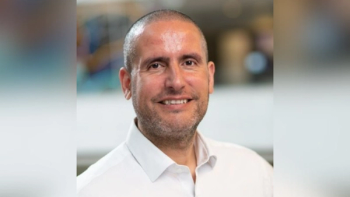
In this Q&A from the 2025 Veeva R&D and Quality Summit, Ibrahim Kamstrup-Akkaoui, vice president of data systems innovation at Novo Nordisk, discusses simplifying system use through the company’s DataNow program and taking a measured, stepwise approach to applying AI and automation across the clinical development lifecycle.
Advertisement
Advertisement
Trending on Applied Clinical Trials Online
1
The Control Plane for Agentic Clinical Operations: Governing Autonomous Digital Actors in Regulated Trials
2
Hierarchical Endpoints in Cardiology: How Much Treatment Benefit, and From Where
3
HHS Launches SURPASS Program and Three Complementary Initiatives to Transform Clinical Trial Design and Infrastructure
4
ACT Brief: AI Adoption Starting Points, Hierarchical Endpoints and Patient Priorities, and Early-Stage Program Termination
5