

Commentary|Videos|December 6, 2024
Peer Exchange: Technology's Role in Achieving Greater DE&I in Clinical Trials
Author(s)Andy Studna, Senior Editor
Industry experts discuss the use of decentralized technologies and the potential of artificial intelligence in reaching underrepresented patient populations.
Advertisement
Episodes in this series
In this roundtable discussion, industry experts gathered to address the state of achieving greater diversity in clinical research. The group highlighted a variety of topics including current challenges they are seeing, the use of technology, and more.
Moderated by Otis Johnson, PhD, MPA Co-Founder & Principal Consultant, Trial Equity, the panel featured key insights from Sophia McLeod, Sr. Director, Government Relations, ACRO; Erin Stern, PharmD, Research Support Pharmacist, Mayo Clinic; and Caitlin Brown, PharmD, Neurocritical Care and Emergency Medicine Clinical Pharmacist, Mayo Clinic.
Brown highlighted the progress in women's representation, but also noted challenges with racial and ethnic groups due to historical mistrust, access, eligibility criteria, and language barriers. McLeod emphasized the importance of early diversity planning in protocol design and community engagement. Stern discussed the logistical challenges of decentralized trials and the need for better technology integration. The panel agreed on the necessity of consistent funding, community involvement, and ethical artificial intelligence use to enhance DE&I in clinical research.
Advertisement
Related to this article
In this video interview, Shaalan Beg, MD, MBA, FASCO, chief medical officer at ConcertAI, outlines how integrating trial matching with standard of care workflows and uniform screening can replace reliance on physician memory with timely, consistent nudges.
In this Q&A, Shaalan Beg, MD, MBA, FASCO, chief medical officer at ConcertAI, discusses why so many patients from underrepresented groups are never asked to join a clinical trial, how AI-enabled matching and screening can make oncology access more consistent, and why the conversation with the patient must stay human.
In this video interview, Shaalan Beg, MD, MBA, FASCO, chief medical officer at ConcertAI, makes the case that oncologists must lead discussions about randomization and treatment decisions, while AI can prepare patients beforehand and support them afterward.
In this video interview, Shaalan Beg, MD, MBA, FASCO, chief medical officer at ConcertAI, explains how AI can unlock unstructured chart data and cut coordinator screening time from hours to minutes, easing a clinical research workforce under strain.
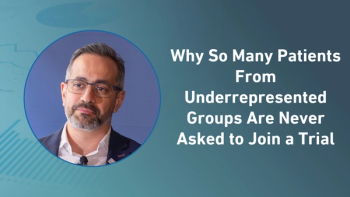
In this video interview, Shaalan Beg, MD, MBA, FASCO, chief medical officer at ConcertAI, explains why trial availability, shaped heavily by zip code, is the biggest barrier to enrollment and how access patterns mirror broader healthcare disparities.
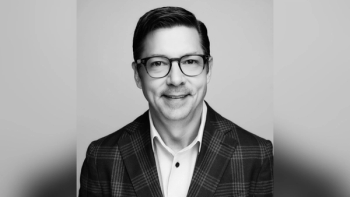
In this Q&A, Kent Thoelke, CEO of Paradigm Health, discusses why participation gaps in community and rural settings come down to both patient cost barriers and site infrastructure, how legacy workflows weigh on community clinics, and what policy and technology changes it would take to make clinical research a real care option for more patients.

Community participation gaps look less like a question of patient willingness and more like a financing and infrastructure problem that no single bill has yet solved.

Decentralized trial success depends less on how far activities move away from sites than on matching each activity’s delivery model to participant burden, site readiness, and data integrity, using patient intelligence to decide where flexibility helps and where site-based care remains essential.
Advertisement
Advertisement
Trending on Applied Clinical Trials Online
1
The Oncology Trial Has Changed, Has IRB Oversight Kept Up?
2
Participant Experience with AI-Assisted and Web-Based Clinical Trial Pre-Screening
3
ACT Brief: AI Trial Matching Access, IRB Oncology Expertise, and Livsayis Myasthenia Gravis Approval
4
Q3 Healthcare Report Cites Federal Research Cuts and FDA Staff Losses as Pressures on Biotech
5