

Comparator drug sourcing in the EU is shaped by a defined set of availability, regulatory, competitive, and logistical pressures, alongside practical strategies to reduce risk and protect trial timelines.
Comparator drug sourcing in the EU is shaped by a defined set of availability, regulatory, competitive, and logistical pressures, alongside practical strategies to reduce risk and protect trial timelines.
In today’s ACT Brief, we examine why representative enrollment remains a barrier in US cancer trials, review Johnson & Johnson’s positive Phase IIb results for nipocalimab in systemic lupus erythematosus, and break down a new multibillion-dollar research and licensing agreement between Nimbus Therapeutics and Eli Lilly targeting oral obesity treatments.

Phase IIb JASMINE data show nipocalimab met its primary endpoint in adults with systemic lupus erythematosus, marking the first positive readout for an FcRn blocker in this disease.
Assess the industry-level changes needed to ensure cancer clinical trial populations better reflect disease demographics, improve US-based enrollment, and support regulatory confidence in trial outcomes.
In today’s ACT Brief, we explore how site initiation can be leveraged to improve early trial performance through demonstrated readiness, examine how AI and decentralized infrastructure are reshaping clinical operations strategy, and review FDA’s approval of the first new pharmacologic motion sickness treatment in more than four decades.

By leveraging the Fresh Start Effect at site initiation and shifting from passive training to demonstrated readiness, sponsors and CROs can turn trial launch into a powerful multiplier for early performance, compliance, and execution quality.

Understand which barriers to cancer trial participation remain most difficult to overcome, including geography and trial centralization, and how decentralized approaches and care delivery closer to home may help close access gaps.
In today’s ACT Brief, we examine persistent barriers limiting cancer trial participation and emerging approaches to address them, outline new guidance clarifying investigator versus sponsor ownership of IRT data, and review evidence highlighting sub-Saharan Africa’s capacity to support controlled clinical trials.

Unclear boundaries between investigator-controlled and sponsor-managed data in IRT systems are creating avoidable compliance risk, particularly around investigational product inventory and quality actions.

Explore early data from the ACTS program that reveal the volume and types of patient-reported barriers to cancer care and clinical trial participation, highlighting the critical role of support services in sustaining enrollment.
In today’s ACT Brief, we examine new data from the American Cancer Society on how transportation and lodging support affect cancer trial participation, review the most-viewed Applied Clinical Trials video interviews of 2025, and break down key trial results supporting the FDA approval of narsoplimab for transplant-associated thrombotic microangiopathy.

Funding uncertainty, legal and political pressures, trade policy shifts, site collaboration strategies, and leadership perspectives were central themes across Applied Clinical Trials’ most-watched video interviews.

Learn why combining AI-enabled trial matching with transportation, lodging, and financial assistance is essential to turning trial eligibility into actual participation—and why matching alone is not enough.
Examine how the American Cancer Society’s national ACTS expansion is designed to simplify trial discovery, reduce logistical barriers, and help patients, caregivers, and providers navigate cancer clinical trials through a centralized support model.

Generative AI adoption, regulatory scrutiny, DEI policy shifts, real-world evidence, and rare disease economics emerged as key themes across these most-read Applied Clinical Trials articles shaping clinical research and drug development today.

Persistent recruitment delays, high dropout rates, and missed timelines continue to slow global clinical trials, while data show that sub-Saharan Africa offers a largely untapped opportunity with established research capacity, large patient pools, and strong enrollment and retention performance.
In today’s ACT Brief, we cover the FDA approval of oral Wegovy based on Phase III OASIS 4 results, recap the most-read Applied Clinical Trials articles of 2025, and examine why data quality remains critical to enabling AI in clinical trials.

The FDA approval of oral semaglutide marks the first GLP-1 pill for chronic weight management, supported by Phase III OASIS 4 data demonstrating substantial weight loss, favorable safety, and improvements in cardiometabolic risk factors.

Review the performance, engagement, and satisfaction metrics sponsors and CROs should track to determine whether operational improvements are reducing burden and strengthening site relationships.
In today’s ACT Brief, we look at how AI-enabled workflows can automate existing site processes, review the FDA approval of subcutaneous Lunsumio VELO for relapsed or refractory follicular lymphoma, and examine early clinical development activity for a pan-KRAS inhibitor licensed by AstraZeneca.
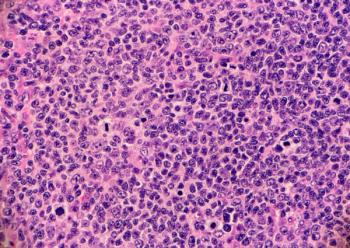
The FDA has cleared subcutaneous mosunetuzumab for adults with relapsed or refractory follicular lymphoma after two or more prior therapies, supported by Phase I/II data showing durable responses and a manageable safety profile with markedly reduced administration time.

Learn how AI-enabled automation can streamline existing operational processes, reduce manual effort, and enhance efficiency while allowing sites to work as they do today.
In today’s ACT Brief, we examine why fragmented data systems continue to slow life sciences research, review how sponsor sourcing decisions may affect site experience and study execution, and report on topline Phase III results for Eli Lilly’s oral GLP-1 therapy orforglipron.

Only with recent advances in cloud computing, data standards, and interoperable platforms has it become feasible to realize the full potential of a digital thread.

Analyze how functional sourcing, application strategy, and consistency across sponsors and CROs directly influence site workflows, execution efficiency, and long-term collaboration.
In today’s ACT Brief, we examine how sponsors are reassessing new engagement technologies to avoid increasing site burden, review new research on integrating unstructured health data to scale eSource-enabled trials, and cover Novo Nordisk’s NDA submission for its fixed-dose amylin–GLP-1 obesity therapy, CagriSema.

New research finds that while eSource adoption is advancing through EHR-to-EDC workflows, scaling its impact will depend on integrating unstructured clinical data using AI, shared standards, and collaborative validation models across sites, sponsors, and vendors.

Explore why new tools should aim to remain burden-neutral before delivering efficiency gains, and how sponsors can introduce systems that benefit sites without disrupting daily trial management.
In today’s ACT Brief, we look at emerging operational changes aimed at reducing site burden, review the FDA approval of GSK’s twice-yearly biologic for severe asthma, and examine a national priority voucher granted for a new multiple myeloma treatment combination.

The FDA has approved Exdensur depemokimab-ulaa as an add-on maintenance therapy for severe asthma in patients aged 12 and older, supported by Phase III SWIFT trial data showing significant reductions in annual exacerbations with twice-yearly dosing.