

News
Advertisement
Company News Release
Advertisement
Company News Release
Company News Release
Advertisement
Company News Release
Applied Clinical Trials
SUBJECT RECRUITMENT : Integrated Team - Sponsors, CROs, and Sites Patient Tracking Services Can Help Reduce Lost to Follow-Up TRIAL DESIGN : Pediatric Trials - Errors in Informed Consent Also in this issue : Common Rule Revision, EU?s Health Policy and Clinical Trials, CROs Going Private, Research Clusters
Advertisement
Applied Clinical Trials
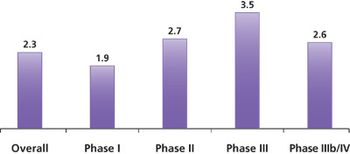
A recent study conducted by the Tufts Center for the Study of Drug Development (Tufts CSDD) found that more than half of all protocols require one or more amendments.

Applied Clinical Trials
The EMA is moving its offices to Canary Wharf Estate.

Applied Clinical Trials
Companies such as ExcoInTouch, Pfizer, and others are turning to mobile technology.

Applied Clinical Trials
Industry news focusing on the people and organizations who work in the clinical trials profession.
Applied Clinical Trials
The New England Journal of Medicine reveals list of biosimilar guidelines.
Company News Release
Company News Release
Company News Release
Company News Release
Applied Clinical Trials
Company News Release
Applied Clinical Trials
Company News Release
Company News Release
Advertisement
Advertisement
Trending on Applied Clinical Trials Online
1
The Control Plane for Agentic Clinical Operations: Governing Autonomous Digital Actors in Regulated Trials
2
HHS Launches SURPASS Program and Three Complementary Initiatives to Transform Clinical Trial Design and Infrastructure
3
Where AI Leads in Trial Design—and Where Humans Still Need To
4
What an AI-Informed Approach Means for How Sponsors Think About Risk
5