
In this video interview, Kimberly Tableman, founder & CEO, ESPERO, talks protocol submission formats and how data interoperability can support artificial intelligence.
In this video interview, Kimberly Tableman, founder & CEO, ESPERO, talks protocol submission formats and how data interoperability can support artificial intelligence.

A focus on data and process excellence advances product development.

In this video interview, Kimberly Tableman, founder & CEO, ESPERO, discusses historical challenges with long protocol development timelines and how they can be addressed.

Pilot trial shows that a user-friendly electronic patient-reported outcome (ePRO) monitoring system significantly improves patient-centered cardiovascular care by enhancing patient-physician communication, increasing clarity in treatment explanations, and empowering patients with better knowledge of their conditions.

Compliance with state telemedicine requirements is imperative, as not only will most clinical trial sponsors contractually require such compliance, but non-compliance may also subject the practitioner to licensure violations and liability.


Recent research from the Tufts CSDD gauged progress in the context of the “Chief Diversity Officer” role at top pharmaceutical companies.

Results from the TROPION-Lung05 and TROPION-Lung01 clinical trials show the promise of datopotamab deruxtecan, a novel TROP2-directed antibody-drug conjugate, for the treatment of locally advanced or metastatic EGFR-mutated non-small cell lung cancer.

In this video interview, Sujay Jadhav, CEO of Verana Health, talks external control arms and how they can increase study feasibility and inclusivity.

While there has been a number of recent initiatives put into place to support diversity, equity, and inclusion in clinical trials, there is still a considerable amount of room for improvement.

The emerging solution helps assess how much a therapy being evaluated in a clinical trial can benefit an individual patient.

Phase III IRAKLIA trial shows that subcutaneous Sarclisa delivered via an on-body delivery system is as effective and safe as intravenous administration in treating relapsed or refractory multiple myeloma.

In this video interview, Sujay Jadhav, CEO of Verana Health, highlights the role of real-world evidence alongside unstructured and structured data in better understanding the patient journey.

In the study, nipocalimab plus standard of care demonstrated superiority in activities of daily living for patients with generalized myasthenia gravis.
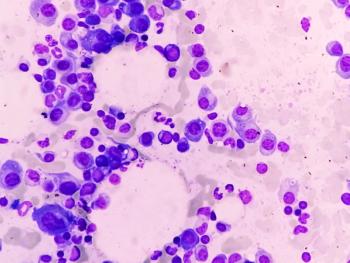
A Phase Ib/II dose escalation and expansion trial shows promising antitumor activity and durable responses with Talvey (talquetamab) plus Tecvayli (teclistamab) in the treatment of relapsed or refractory multiple myeloma, but a higher incidence of grade 3 or 4 infections.

In this video interview, Sujay Jadhav, CEO of Verana Health, discusses how using genomic data and real-world evidence can provide added context to traditional factors such as Gleason scores and PSA levels.

Initial data from Phase I clinical trial showed encouraging single agent activity in patients with different types of PD-1 resistant tumors.

Study finds the typical cost of clinical research for developing new drugs is lower than previously estimated, with median costs providing a more accurate reflection than mean costs.

In this video interview, Sujay Jadhav, CEO of Verana Health, talks AI and its role in optimizing trial design.
Unlocking the full potential of artificial intelligence requires these stakeholders to ensure their data are accessible and secure.

Results from the Phase III MARIPOSA trial demonstrated the combination of Rybrevant (amivantamab-vmjw) and Lazcluze (lazertinib) significantly improves overall survival compared to the current standard of care, Tagrisso (osimertinib), for patients with EGFR-mutated advanced or metastatic non-small cell lung cancer.
In this video interview, Sujay Jadhav, CEO of Verana Health, highlights how the industry can use RWD to compare outcomes from treatment and non-treatment arms.

This framework marks the agency’s first official recommendation on the use of AI in drug development.

In this video interview, Sujay Jadhav, CEO of Verana Health, discusses how the use of unstructured data can help improve clinical research in 2025.

Study finds that addressing racial disparities in lupus clinical trials requires targeted education, increased diversity among trial staff, culturally sensitive recruitment strategies, and addressing social determinants of health to improve Black patient participation.

Intrathecal onasemnogene abeparvovec (OAV101 IT) demonstrated an increase from baseline in Hammersmith Functional Motor Scale – Expanded total score in children and young adults with SMA.

This year’s submissions highlight initiatives around accelerating enrollment, personalizing recruitment, increasing diversity, and more.

Study finds that existing patient-reported outcome (PRO) measures fail to fully capture health-related quality-of-life for some conditions, highlighting the need for a novel, disease-specific PRO to better assess treatment efficacy and improve patient care in clinical trials.

Phase III trial shows the combination of brexpiprazole plus sertraline significantly improved the symptoms of post-traumatic stress disorder compared to sertraline plus placebo, with a tolerable safety profile and low discontinuation rates.

In this video interview, Rachael Fones, director, government & public affairs, IQVIA, discusses some of the key ways that different trial sponsors may need support in meeting diversity expectations.