




Investigative Sites
Latest News
Advertisement
Latest Videos








Advertisement
More News
Advertisement

Webcasts
Webinar Date/Time: Wednesday, May 22, 2024 at 11am EDT | 8am PDT | 4pm BST | 5pm CEST

Despite industry-wide excitement over the involvement of retail pharmacies in clinical research, there is little information currently available on how retail pharmacies are perceived by investigative sites and patients.
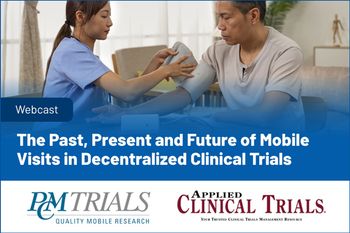
Webcasts
Webinar Date/Time: Wed, Mar 27, 2024 11:00 AM EDT

Practical ways CROs and sponsors can support sites and improve quality.

Baig discusses the challenges she is currently seeing with connecting sites as well as how they can keep pace with new technologies.

The revision of Annex 1 clearly calls out the use of quality risk management to identify potential risks to quality and the implementation of a contamination control strategy.

Clinical Research Sites Have Spoken: How Can Sponsors and CROs Improve the Site Experience?
ByPAREXEL
Webcasts
Webinar Date/Time: Mon, Dec 4, 2023 11:00 AM EST

Minimizing the cost of financing receivables could be the difference between growth and decline.

Webcasts
Webinar Date/Time: Thursday, October 12th, 2023 at 11am EDT | 8am PDT | 4pm BST | 5pm CEST

Using IROs can offer the opportunity for doctors to incorporate clinical research as a care option in their practices.
Advertisement

Webcasts
Webinar Date/Time: Wednesday, August 16, 2023 at 11am EDT

In this Q&A, Jimmy Bechtel, MBA, VP of site engagement, Society for Clinical Research Sites discusses evolving challenges in the site landscape, what SCRS is doing to alleviate burden, as well as the organization’s upcoming event, the Global Site Solutions Summit in October 2023.

Privia Care Center locations that do not currently conduct clinical trials will receive embedded research from Velocity.

eCOA IRT eConsent: Simplifying user experience and driving process efficiencies through integration and automation
ByIQVIA
Webcasts
Webinar Date/Time: Thursday, June 22nd, 2023 at 9am EDT | 6pm PDT | 2pm BST | 3pm CEST


Webcasts
Webinar Date/Time: Thursday, May 25th, 2023 at 11am EDT | 8am PDT | 4pm BST | 5pm CEST

Despite benefits of industry leaders' involvement, patient participation in clinical trials remain low.
Tufts CSDD survey finds fostering healthy relationships with site staff is key to a positive outlook.
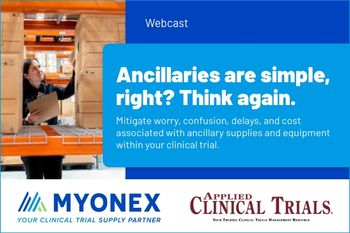
Webcasts
Webinar Date/Time: Wednesday, March 29, 2023 at 11am ET |10 am CT | 8am PT

Webcasts
Webinar Date/Time: Thu, Mar 16, 2023 11:00 AM EDT

Kroger Health, the healthcare division of The Kroger Co., has established its clinical trial site network in conjunction with Kroger's first trial in active recruitment for colorectal cancer gut and immune health observation.
Addressing Operational and Technical Challenges in Home-use Point-of-Care Device Development and Deployment
ByEvidera
Webcasts
Webinar Date/Time: Mon, Feb 13, 2023 10:00 AM EST
Webcast
Webinar Date/Time: Wed, Nov 30, 2022 10:00 AM EST

Dr. Pratik Darji, Head of Progressive Clinical Research Solutions in Gujarat, India discusses the state of clinical trials in the country.

A more crowded space is presenting new challenges for stakeholders that must be addressed to improve efficiency.
Advertisement
Advertisement
Trending on Applied Clinical Trials Online
1
Why Seizure Counts Alone Can't Define Success in Epilepsy Trials
2
Lab Orchestration Is Not What You Think It Is
3
ACT Brief: Patient Voice in Protocol Design, AI-Informed Recruitment Workflows, and Engagement Maturity Beyond Performative
4
Recruitment in the Age of AI: Q&A with John Worden, Javara
5