
Sponsored Content
Download this report to learn how the COVID-19 pandemic impacted the future of the clinical research workforce.
Sponsored Content
Download this report to learn how the COVID-19 pandemic impacted the future of the clinical research workforce.
Sponsored Content
“If it’s not documented, it didn’t happen.” This is a well known saying to Quality teams in biotechnology. What it means is that every step in the development, clinical, and manufacturing processes needs to be documented or else regulators can’t accept that it happened. In the eyes of the FDA, without documentation, the research, the clinical trials, or the manufacturing process needs to be repeated. This results in added expense, costly delays, and an erosion in trust from regulators, investors, and consumers. In this piece, Egnyte chronicles the nine elements that successful Quality & Compliance teams adopt to keep pace with the speed of discovery. Learn the best practices for an effective quality documentation process.
Sponsored Content
Drug development has dramatically changed over the past ten years. Specifically when it comes to GxP compliance and validation. Many biopharma companies struggle to adopt new technologies because of the uncertainty of how to comply with FDA regulations. In this white paper, Egnyte will chronicle recent technological trends, specific challenges these trends pose for Quality & CSV teams, and best practices for tackling resulting compliance issues.
Sponsored Content
As life sciences companies grow, the regulatory compliance requirements and risks expand as well. These responsibilities extend beyond conventional health-related frameworks (e.g. GxP, HIPAA, etc.) into the realm of data privacy. For high-growth institutions with limited resources & bandwidth, the question arises: what should you do? In this document, Egnyte chronicles some of the regulations affecting the life sciences industry and share 5 activities to help your organization comply with these new and dynamic laws.
Sponsored Content
Recently there has been an increase and awareness of the long-standing problems with diversity and the inclusion of under-represented populations in clinical research.
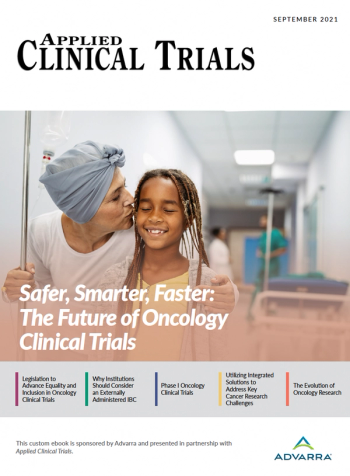
Sponsored Content
Learn about how sponsors and sites can identify and overcome barriers to participation and implement strategies to diversify their clinical trials.
Applied Clinical Trials E-Books
Sponsored Content
Read this whitepaper to learn about key considerations pharmacovigilance teams examine when evaluating new safety solutions.
Sponsored Content
Watch and learn how The McCreadie Group and endpoint experts offer a solution to the current struggles IDS sites and sponsors have been facing.
endpoint’s VP, data and Quality, Cat Hall shares key questions you might be missing that help ensure your IRT provider is focused on quality first.
This session, led by endpoint’s VP of Data and Quality, Cat Hall discusses how efficient clinical trial design strategies that expedite the development of oncology drugs and biologics are necessary.
Sponsored Content
Automating study start-up in a single application enables faster site activation, better collaboration with study partners, and more informed decision-making. Read this white paper to learn best practices from top 20 pharmas on effective study start-up deployment and how to overcome common barriers to change.
Sponsored Content
This case study demonstrates how Medable eConsent enabled greater patient access to a trial, improved trial operations and time to treatment.
This white paper describes a framework for leveraging data, analytics, and patient insights for optimal design of clinical trials.
Sponsored Content
Sponsored Content
How are sponsors empowering sites to reach their full potential in 2021?
Sponsored Content
Automating study start-up enables faster site activation, better collaboration with study partners, and more informed decision-making. That’s why sponsors and contract research organizations (CROs) are turning to technology specifically designed to manage the intricacies of study start-up.
Sponsored Content
Learn how you can improve cost and process efficiencies and make it easier for pharmacovigilance teams to perform advanced tasks.
Read this white paper on navigating the complexities of today’s increasingly complicated clinical trials. Consider the services your study needs for success.
Every successful clinical trial must protect patients while collecting complete, accurate data that supports evaluation of the safety and effectiveness of the drug or device. Here’s a closer look at why data and safety managers are so important to a clinical trial, what can go wrong when they aren’t aligned and how to improve collaboration between them.
Discover how a small pharmaceutical company leveraged unified visualizations and reporting into study data to save $50M in study costs and months in development time.
Insmed had a late-breaking strategy change that challenged their timelines. Learn how they incorporated significant protocol changes and still hit their FPI deadline.