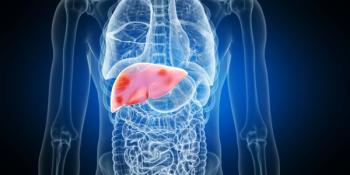
The PANOVA-3 study met its primary endpoint, demonstrating an improvement in overall survival for patients treated with Tumor Treating Fields.

The PANOVA-3 study met its primary endpoint, demonstrating an improvement in overall survival for patients treated with Tumor Treating Fields.

Phase III CheckMate 8HW trial results demonstrated that the combination of Opdivo (nivolumab) and Yervoy (ipilimumab) significantly improves progression-free survival and has a better safety profile compared to chemotherapy in the first-line treatment of MSI-H or dMMR metastatic colorectal cancer.

In this video interview, Jeff Sidell, PhD, chief technology officer, Advarra, talks AI and how it can automate repetitive processes.

New solution offers real-time data exchange and inventory control, ensuring sample integrity.

WINREVAIR (sotatercept-csrk) met the study’s primary endpoint of time to first morbidity or mortality event.

In this video interview, Jeff Sidell, PhD, chief technology officer, Advarra, highlights how integration can simplify processes.

Data from the CAPItello-281 trial show Truqap alongside abiraterone and androgen deprivation therapy achieved a statistically significant and clinically meaningful improvement in radiographic progression-free survival.

In this video interview, Jeff Sidell, PhD, chief technology officer, Advarra, discusses how sites are being burdened by increasingly complex technologies.

To meet the growing demands of clinical research, sponsors must prioritize comprehensive support models, such as clinical site ambassadors and patient journey coordinators, who can address operational challenges and improve site relationships, patient satisfaction, and overall trial efficiency.

The kinase inhibitor will be evaluated in patients with newly diagnosed glioblastoma.

In this video interview, Mark Melton, vice president of biospecimen data and operations, Slope, highlights the need for improved management of the sample lifecycle.

The FDA's guidance is part of a broader effort to modernize clinical trials, improve efficiency, reduce participant burden, and expand access, particularly for underrepresented populations and those in geographically or economically constrained areas.

Multilayered strategies such as working with patient advocacy organizations and leveraging technology can help industry better partner with patients.

Results from a followup evaluation of COLOFOL trial show no significant improvement in 10-year overall or colorectal cancer–specific mortality rates between high-frequency and low-frequency postoperative follow-up regimens for patients with stage II or III colorectal cancer.

New paper features insights from nearly 100 experts on four key barriers to clinical trial access.

The Phase II KRAKEN trial demonstrated that muvalaplin, Eli Lilly's first-in-class oral small molecule inhibitor, significantly reduces lipoprotein(a) levels with minimal adverse effects, offering a promising new approach to addressing a major cardiovascular risk factor.

In this video interview, Mark Melton, vice president of biospecimen data and operations, Slope, talks challenges at the site-level with collection.

Former Chief Oncology Officer and Executive Vice President, Chris Boshoff, MD, PhD, will assume the role and lead all R&D functions including oncology.

Zerlasiran, a novel siRNA therapy, demonstrated over 80% sustained reductions in lipoprotein(a) levels with infrequent dosing in the Phase II ALPACAR-360 trial, highlighting its potential as a safe and effective treatment for patients at high risk of cardiovascular disease.

In this video interview, Mark Melton, vice president of biospecimen data and operations, Slope, highlights the clinical research industry’s need for more regulation around collecting data.

In this video interview, Mark Melton, vice president of biospecimen data and operations, Slope, discusses how different collection methods are creating complexities.

The Phase III CLEAR SYNERGY trial found that long-term colchicine treatment after acute myocardial infarction does not reduce major cardiovascular events compared to placebo, highlighting mixed results from prior studies on its efficacy in cardiovascular disease.

The Phase III SUMMIT trial showed that tirzepatide significantly reduces the risk of worsening heart failure events or death from cardiovascular causes, enhances physical function, and leads to weight loss and reduced inflammation in patients with heart failure with preserved ejection fraction.

In this video interview, Kelli Aufderheide, director, laboratory decentralized trial solutions, IQVIA Laboratories, highlights how stakeholders can best support sites throughout complex studies.

With universal adoption of health literacy best practices slow going over the years, advocates are redefining the term to encompass much more of what health-related communication requires beyond simply words.

Multiple Phase III trials and open label extensions show Bimzelx (bimekizumab-bkzx) offers an effective approach in targeting key inflammatory pathways involved in psoriatic arthritis, non-radiographic axial spondyloarthritis, and ankylosing spondylitis.

What learning science has taught us about the drivers and predictors of change—and applying those to clinical research practice.

Phase III DREAMM-7 trial data show that the combination of Blenrep (belantamab mafodotin) with bortezomib and dexamethasone (BorDex) significantly improved overall survival in patients with relapsed or refractory multiple myeloma compared to standard treatment with Darzalex (daratumumab) and BorDex.

In this video interview, Kelli Aufderheide, director, laboratory decentralized trial solutions, IQVIA Laboratories, discusses the differences between working with local labs and central labs.

Over 200 stakeholders highlighted challenges such as communication, training, and improving technology.