

ACT Style Guidelines
ACT Style Guidelines
Applied Clinical Trials
The Indian government has reacted to the enforced closure of three of its oldest vaccine manufacturing plants by launching a plan to convert them to drug testing laboratories.
Applied Clinical Trials
Clinical and Anatomic Central Laboratory Services Combined
Investigators' financial interests have little effect on potential clinical trial participants.
Applied Clinical Trials
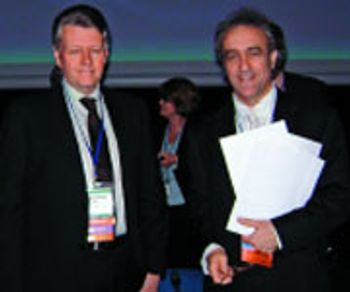
The Drug Information Association hosted its 20th Annual European meeting in Barcelona, Spain, where industry experts discussed topics at the forefront of European pharma.
Applied Clinical Trials
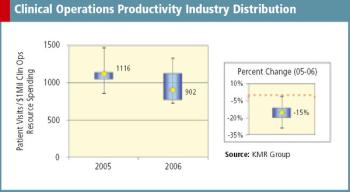
A recent survey from KMR Group shows a 15% decline in clinical operations productivity since 2005.

Applied Clinical Trials
For the first time n a Phase 1 trial, 3D animation is used for informed consent.
Applied Clinical Trials
Europe aims to create new regulations regarding hematological malignancies.

Applied Clinical Trials
A look at the latest industry news
Applied Clinical Trials
Janet Woodcock is welcomed back as the director of the Center for Drug Evaluation and Research (CDER).
Applied Clinical Trials
Profect Medical Technologies today announced the introduction of their Clinical Imaging Services division and the hiring of Holly Smith as its Director.
ACT License Agreement
ACT Manuscript Review Form
Applied Clinical Trials
Leading EDC Company Adds Offerings to Further Drive Efficiencies Across the Clinical Research Process.
UNECA & AU Science with Africa Conference provides a forum for discussion of the development of African health research guidelines and the launch of the AfroGuide Project.
Applied Clinical Trials
CDISC and HL7 Joint Worldwide Clinical Research Standards Educational Events Planned for 2008

Applied Clinical Trials
EDC 4.1 System Goes Through Paces; Document Management Announced


Applied Clinical Trials
New Version Extends Data Cleaning and Query Functions
Applied Clinical Trials
Clinical Research Information Exchange International One Step Closer to Realizing its Goal of Transforming Clinical Research
Applied Clinical Trials

Applied Clinical Trials Supplements
Regional centralized labs are emerging to support global clinical trials.

Applied Clinical Trials Supplements
Applied Clinical Trials
TrialStat's EDC Platform Adds Graphical Reporting Features and More

Applied Clinical Trials
Recent announcements streamline adverse event reporting

Applied Clinical Trials
Saul Shiffman, cofounder and chief scientific officer of invivodata, Inc., examines how patient-reported data collection has been transformed since 1987.
Applied Clinical Trials
Scotland chosen to lead a £26m clinical trial for arthritis sufferers
Applied Clinical Trials
New Report Offers Hope for Closing Health Gap for African Americans, With Nearly 700 Medicines in Pipeline