
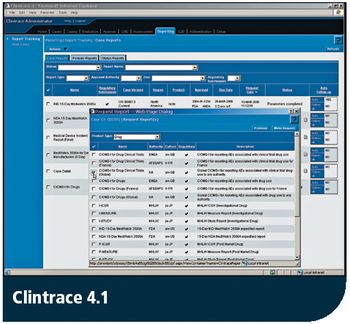
Applied Clinical Trials
Release takes adverse event reporting to a new level, complies with FDA's new rules
Applied Clinical Trials
Release takes adverse event reporting to a new level, complies with FDA's new rules
Applied Clinical Trials
Document management suite gets training records tool with eCTD capabilities slated for V4.0

Applied Clinical Trials
What has the industry and the FDA accomplished this year and what still needs to be done?
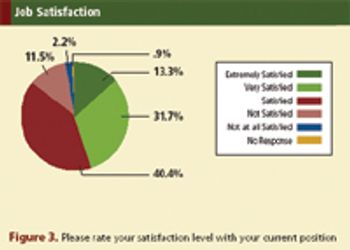
Applied Clinical Trials
From stress levels to job satisfaction, ACT's first salary survey provides an inside look at our industry today.

Applied Clinical Trials
CEO transition positions Medifacts for growth and expansion
Applied Clinical Trials
AAIPharma Completes CAC Acquisition
2006 Corporate Profile Instructions

Applied Clinical Trials
A detailed history of the billion-dollar industry since its inception in 1986 and what the future may hold.
Applied Clinical Trials
A detailed history of the billion-dollar industry since its inception in 1986 and what the future may hold.

Applied Clinical Trials
A listing of clinical laboratories arranged alphabetically, with addresses and contact details.
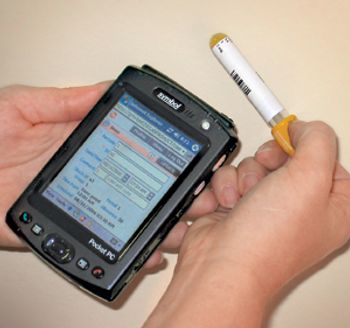
Applied Clinical Trials
Phase I package adds formulary accountability, recruitment, lab, and EDC features
Applied Clinical Trials
Phase I package adds formulary accountability, recruitment, lab, and EDC features

Applied Clinical Trials
Regulatory submission solution addresses the needs of smaller biotech and pharma companies
Applied Clinical Trials
Phase I package adds formulary accountability, recruitment, lab, and EDC features

Applied Clinical Trials
System enables IRB members to review ?s in near real-time from anywhere in the world
Applied Clinical Trials
A listing of clinical laboratories arranged alphabetically, with addresses and contact details.
Applied Clinical Trials
UAB Launches Promising Brain Tumor Trial



Applied Clinical Trials
What do the G8 Summit, national security, and the pharmaceutical industry have in common?
Applied Clinical Trials
Allied Research International (ARI), Canada's leading contract research organization (CRO), announced today that it has acquired key assets of South Florida Bioavailability Clinic International's (SFBC) Miami, Florida operations.

Phase Forward Incorporated (NASDAQ: PFWD), a leading provider of data management solutions for clinical trials and drug safety, today announced its financial results for the second quarter of 2006.
Applied Clinical Trials
Shire plc announced today that it has submitted a new drug application (NDA) to the U.S. Food and Drug Administration (FDA) for SPD465, an investigational amphetamine compound for the treatment of Attention-Deficit/Hyperactivity Disorder (ADHD) in the adult population.
Applied Clinical Trials
Five new clinical trial sponsors brought by COResearch will utilize the DATATRAK eClinical™ platform for international cardiac safety studies for drugs and devices
ACT BPA June 2006