

DeOliveira, senior director, global regulatory operations, Cerevel (now part of AbbVie) highlights her experience in regulatory operations and how to address increased oversight from regulators.
DeOliveira, senior director, global regulatory operations, Cerevel (now part of AbbVie) highlights her experience in regulatory operations and how to address increased oversight from regulators.

An exploratory analysis from the TROPION-Lung01 Phase III trial found that tumors expressing TROP2 were associated with significantly improved responses to datopotamab deruxtecan compared to docetaxel in patients with non-small cell lung cancer.
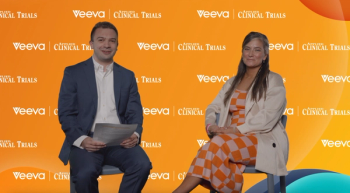
In a fireside chat with ACT editor Andy Studna, Burks, vice president, site solutions highlights her career path and streamlining workflows between sites and sponsors.

Results from the Phase III MARIPOSA study found that the combination therapy showed an 8% improvement in overall survival in non-small cell lung cancer compared to osimertinib.

By embracing this leadership approach, clinical research stakeholders can prioritize more effective staff training and readiness.

Potential first-in-class B7-H3 directed antibody drug conjugate ifinatamab deruxtecan shows potential to improve outcomes for patients living with difficult-to-treat form of lung cancer.

Improving accessibility drives faster and more efficient patient enrollment and a more diverse trial population.

Across two clinical trials in the QWINT program, efsitora showed non-inferior A1C reduction compared to other frequently used daily insulins.

Study finds nearly 75% of patients with heterozygous familial hypercholesterolemia achieved a ≥50% drop in serum LDL-C concentration from baseline to about 12 months of therapy with a PCSK9 inhibitor.

Study findings suggest that most qualitative systemic reviews implement a generic approach as opposed to focusing on equity, diversity, and inclusion issues.

Latest version offers a streamlined site-centric experience to simplify relationships with study sponsors.

Lu AG09222 shows promise as first-in-class medication that prevents neurogenic inflammation, vasodilation, and parasympathetic lacrimation, which are considered to be surrogate markers of migraine attacks.

While measuring and managing site costs can be challenging, these codes can aid in accounting for labor expenses, budgeting for sponsors, and more.

Aixial, a contract research organization, will migrate data onto the Medidata Platform to streamline access.

Edoxaban monotherapy lowered the risk of adverse outcomes, including death from any cause, myocardial infarction, stroke, and systemic embolism at 12 months compared to the dual antithrombotic therapy approach in patients with atrial fibrillation and stable coronary artery disease.

Katsuyoshi Sugita, chief people officer and chief ethics and compliance officer at Astellas Pharma, discusses innovative methods that are improving DE&I in the industry.

Latest Phase II data of Valneva and Pfizer’s VLA15 are consistent with those reported following the first booster dose.

The first-in-class, investigational RNA interference drug plozasiran was found to lower triglyceride levels and incidence of pancreatitis compared to placebo in patients with persistent chylomicronemia, including patients with familial chylomicronemia syndrome.

In the final part of this video interview, Jim Murphy, CEO of Greenphire discusses the role of artificial intelligence, using trusted data, and simplifying protocols.

First FDA submission of nipocalimab is based on positive results from the Phase III Vivacity-MG3 program.

According to a recent Phase II clinical trial conducted by Johns Hopkins Kimmel Cancer Center, all enrolled patients experienced a prostate-specific antigen reduction of 50% or more when treated with Olaparib.

Maximizing the impact of data is only possible when strong fundamental data management capabilities are in place.

In part 4 of this video interview, Jim Murphy, CEO of Greenphire highlights some trends he is currently seeing such as travel reimbursement and minimizing out of pocket costs.

The Phase III V-MONO clinical trial met its primary endpoints, demonstrating Leqvio (inclisiran) monotherapy as superior to placebo and ezetimibe.

Crinecerfont was granted previously granted FDA Priority Review designation to treat children, adolescents, and adults with classic congenital adrenal hyperplasia.

In part 3 of this video interview, Jim Murphy, CEO of Greenphire addresses the increasing complexity of trial protocols and how it is affecting patient access.

In part 2 of this video interview, Jim Murphy, CEO of Greenphire discusses how access to data can impact elements such as budgeting and enrollment.

The clinical program consists of two studies, MELODY-2 and MELODY-3, from which results are expected in Q4 2025.

Cohort study finds a superior tolerability profile with darolutamide compared to other androgen receptor inhibitors, which investigators said indicates an efficacy advantage in the treatment of nonmetastatic castration-resistant prostate cancer.

In the first part of this video interview, Jim Murphy, CEO of Greenphire touches on how changing trends in enrollment are creating obstacles with modeling costs.