



Starting points for meeting eSource data regulatory requirements

Starting points for meeting eSource data regulatory requirements

FDA eyes e-data submissions to improve regulatory oversight and ensure appropriate and safe drug use.

After a long, contentious battle, Republicans mustered up enough votes just before Thanksgiving to approve a massive, complex bill designed to overhaul Medicare policies and provide coverage for prescription drugs.

This past year has been one of tremendous activity at the Food and Drug Administration, and at other government agencies involved with healthcare, biomedical research, and national security.

New initiatives would form networks and harmonize standards to translate basic research into needed treatments.

FDA plans to rewrite rules governing electronic records while offering new policies to encourage risk-based regulatory approaches to application review and inspections.

FDA is exploring policies to incorporate genomic information into the regulatory process.

HHS offers IRBs, institutions, and investigators points to consider when dealing with financial relationships and conflicts of interest in clinical research.

FDA is revising its policies that govern electronic recordkeeping, clarifying standards for measuring subject outcomes, and seeking to encourage pediatric studies.

The HIPAA privacy policy limits the use of protected health information to that required or permitted by regulations.

Sponsors tackle international research challenges to develop AIDS, malaria, and TB therapies for developing nations.

Congressional efforts to establish a Medicare pharmacy benefit will affect R&D, and a new FDA commissioner promises change.

Federal agencies seek to enhance IRB operations as new policies further expand board responsibilities.

Although a Medicare drug benefit appears unattainable this year, Congress is considering other measures to reduce the cost of medicines.

PDUFA III boosts manufacturer fees to expand postapproval surveillance and support new FDA review initiatives.

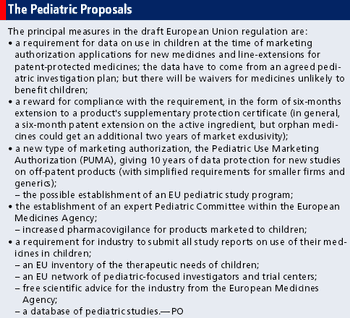
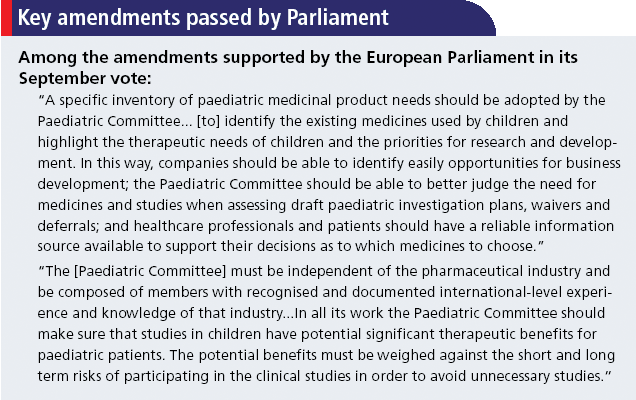
Sponsors are underwriting more studies of children, but controversy continues over the need for FDA?s pediatric rule and the impact of extended exclusivity on generics.

Rules to ensure confidentiality of individual health information threaten to make clinical trials more complex and costly.

Federal prosecutors target sponsors and clinical investigators who misuse federal funds or violate research requirements while FDA proposes new policies and Congress eyes reforms.

Human research protection takes a back seat, as the White House boosts funding for NIH and FDA?along with FDA user fees.

FDA is revising policies to ensure that clinical studies generate sufficient data to ensure the safe use of new medical products.

A proposed policy on Data Monitoring Committee functions and operations raises important issues about the conduct of studies and the evaluation of data.

Efforts to ensure the safety and integrity of clinical trials will generate new standards and expand oversight initiatives.

Efforts to develop anti-terrorism treatments and to fully include women in studies will both affect clinical research.

While Health and Human Services builds a comprehensive program to ensure the safety of human subjects, Congress weighs proposals to stiffen the rules.

As the public clamors for early access to promising new drugs, sponsors worry about the consequences of experimental therapy conducted outside of controlled trials.