


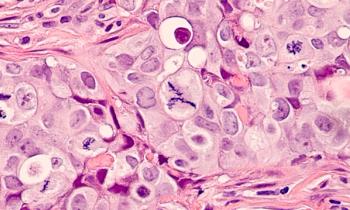
Final overall survival results from the Phase III APHINITY trial show a 17% reduction in the risk of death at 10 years for patients with HER2-positive early-stage breast cancer treated with a Perjeta-based adjuvant regimen.


Full Phase IIIb BATURA Trial Results Show Airsupra Cuts Severe Exacerbations by 47% in Mild Asthma

Merck and Daiichi Sankyo Launch Global Phase III Trial of Novel Antibody Drug Conjugate in Advanced Esophageal Squamous Cell Carcinoma
Final overall survival results from the Phase III APHINITY trial show a 17% reduction in the risk of death at 10 years for patients with HER2-positive early-stage breast cancer treated with a Perjeta-based adjuvant regimen.

In the first head-to-head comparison of leading incretin-based therapies, Eli Lilly’s dual GIP/GLP-1 receptor agonist tirzepatide (Zepbound) delivered significantly greater and sustained weight loss than semaglutide (Wegovy) over 72 weeks in adults with obesity or overweight and comorbidities.

Updated GLISTEN trial results presented at EASL 2025 confirm that the IBAT inhibitor linerixibat significantly improved worst itch scores and itch-related sleep interference over 24 weeks in adults with primary biliary cholangitis.

Updated results from the Phase III ELATIVE trial reveal Iqirvo (elafibranor) significantly reduced fatigue in patients with primary biliary cholangitis, with effects independent of pruritus and supported by proteomic data.

Topline results from the Phase III DESTINY-Breast11 trial show that Enhertu (trastuzumab deruxtecan) followed by paclitaxel, trastuzumab, and pertuzumab significantly improves pathologic complete response rates compared to anthracycline-based standard-of-care regimens in the neoadjuvant treatment of high-risk, locally advanced HER2-positive early-stage breast cancer.

A Phase III randomized trial published in JAMA Network Open found no significant difference in symptom improvement between onabotulinumtoxinA injections and midurethral sling surgery in women with moderate to severe mixed urinary incontinence, with many ultimately needing both therapies to sustain relief.

New long-term extension data from the Phase IIb/III QUASAR trial demonstrate that Tremfya (guselkumab) maintains durable clinical and endoscopic remission through 92 weeks in adults with moderately to severely active ulcerative colitis, with consistent efficacy across prior biologic and JAK inhibitor exposure.

Interim results from the Phase III ESSENCE trial published in The New England Journal of Medicine show once-weekly semaglutide improved liver histology, metabolic markers, and weight loss in patients with biopsy-confirmed metabolic dysfunction–associated steatohepatitis and stage 2 or 3 fibrosis.

Phase III trial data published in The New England Journal of Medicine support Nucala’s role as an add-on biologic therapy to lower exacerbation rates and delay disease progression in patients with eosinophilic chronic obstructive pulmonary disease receiving standard inhaled treatment.

In this video interview, C.K. Wang, MD, chief medical officer, COTA, shares his key takeaways from a recent study he led on data reporting in oncology and highlights how stakeholders should be closely analyzing the accuracy of data they work with.

In this video interview, C.K. Wang, MD, chief medical officer, COTA, discusses a recent study he led on the validity of using real-world data for reporting mortality.

Early findings from Johnson & Johnson’s Phase IIb SunRISe-1 trial show the promise of TAR-200 in patients with Bacillus Calmette-Guérin–unresponsive, high-risk non–muscle-invasive bladder cancer, highlighting its potential as a non-surgical treatment alternative.

Interim KEYNOTE-689 trial data show that perioperative Keytruda significantly lowers the risk of disease progression or recurrence in resectable, locally advanced head and neck squamous cell carcinoma, marking the first major clinical advance for this patient population in more than two decades.

Lorundrostat, a selective aldosterone synthase inhibitor, significantly reduced systolic blood pressure in patients with uncontrolled and treatment-resistant hypertension in the Phase II Advance-HTN trial, indicating its potential as a safer, more effective alternative to current therapies.

Brensocatib significantly reduced the rate of pulmonary exacerbations and slowed lung function decline in patients with non-cystic fibrosis bronchiectasis in the Phase III ASPEN trial.

In the Phase III SELECT-GCA trial, Rinvoq (upadacitinib) 15 mg with a 26-week glucocorticoid taper significantly improved sustained remission rates and reduced disease flares in patients with giant-cell arteritis, offering a promising glucocorticoid-sparing treatment option with a favorable safety profile.

Tolebrutinib did not show superiority over Aubagio (teriflunomide) in reducing relapse rates or MRI-detected inflammatory activity in relapsing multiple sclerosis, but early signals suggest it may have potential in slowing disability progression, warranting further long-term and comparative studies.

Full results from the Phase III ASCENT-04/KEYNOTE-D19 study demonstrated statistically significant and clinically meaningful survival benefits in patients with previously untreated, PD-L1-positive metastatic triple-negative breast cancer.

In the Phase III DESTINY-Breast09 trial, Enhertu (trastuzumab deruxtecan) and Perjeta (pertuzumab) significantly improved progression-free survival compared to the current standard of care in the first-line treatment of HER2-positive metastatic breast cancer, suggesting a potential new standard of care.

In Phase III MINT trial, Uplizna (inebilizumab) demonstrated significant short-term efficacy and a manageable safety profile in adult patients with generalized myasthenia gravis, offering a promising B-cell–targeting treatment option pending long-term data.

Beqvez (fidanacogene elaparvovec), an FDA-approved one-time gene therapy for hemophilia B, demonstrated sustained factor IX expression, low bleeding rates, and a favorable safety profile over long-term follow-up.

Adding Farxiga (dapagliflozin) to standard care significantly reduced the risk of death or worsening heart failure in older patients with severe aortic stenosis following transcatheter aortic-valve implantation, with consistent benefits across patient subgroups and a favorable safety profile.

Tolebrutinib, a brain-penetrant BTK inhibitor, may fill a significant unmet need by delaying disability progression in patients with non-relapsing secondary progressive multiple sclerosis.

In the Phase III EXPECTS trial, patients experiencing mostly mild posterior circulation ischemic stroke who were ineligible for thrombectomy showed significantly better functional recovery at 90 days when treated with alteplase between 4.5 and 24 hours after stroke onset, without an increased risk of symptomatic intracranial hemorrhage.

Long-term extension data show Tremfya (guselkumab) significantly reduced symptoms and inhibited structural joint damage progression in patients with active psoriatic arthritis.