




Clinical Operations & Strategy
Latest News
Advertisement
Latest Videos



Advertisement
More News
Advertisement

The CNPV program has compressed drug review timelines to as little as one to two months for qualifying sponsors, but succeeding under that pressure requires a fundamental rethink of how development teams plan, communicate, and execute.

Clinical Trials Day is an international celebration of everyone who makes medical discoveries possible. It is also an opportunity to shine a light on the innovations helping to keep research rising.

Managing financial integrity in a complex, milestone-driven operating model.

As imaging-heavy clinical trials grow more complex and globally distributed, sponsors are increasingly re-evaluating traditional infrastructure models, with cloud-native platforms showing potential to reduce operational burden, accelerate site activation, improve imaging quality oversight, and lower total trial costs.

From payment delays and feasibility misalignment to technology burden and AI adoption, clinical research sites are navigating a convergence of pressures that increasingly determine who sponsors work with and how well trials perform.

Zentails announced the first dosage of Azenosertib administered in its phase III Aspenova trial to test azenosertib vs chemotherapy in Cyclin E1-positive platinum-resistant ovarian cancer.

Integrating technology and collaboration to close the evidence gap.

Payment experience—including timeliness, transparency, and consistency—is emerging as a key operational factor influencing site financial stability, working relationships with sponsors and CROs, and overall clinical trial execution.

In this Q&A, Jenna DiRito, PhD, COO and co-founder of Revalia Bio, discusses how earlier, human-relevant data is reshaping go/no-go decision-making in drug development and what a truly front-loaded workflow looks like in practice.

In this Q&A, Krishna Cheriath, VP and head of clinical research digital data and AI at Thermo Fisher Scientific, examines how AI is reshaping clinical operations—from case intake and trial design to site burden reduction and the emerging reality of agentic AI in the workforce.
Advertisement

In part 3 of this three-part series, behavioral science reveals that clinical trial diversity cannot be achieved through last-minute recruitment efforts, but requires designing protocols, sites, and enrollment strategies around the real barriers and needs of underrepresented communities from the outset.
Risk-based monitoring requires integrated data systems, validated analytics, and strong governance to work effectively across global trials, but sponsors face significant technical and operational challenges that demand strategic solutions and organizational alignment.

Digital twin technology can reliably simulate standard-of-care treatment outcomes using historical clinical trial data, offering a practical pathway to virtual control arms that reduce recruitment burden and address ethical concerns around placebo designs.

As clinical trials grow more complex, the technology infrastructure supporting them is under renewed scrutiny. Across data validation, AI adoption, and site-based systems, 2026 is shaping up as a year of implementation rather than experimentation.

Sample integrity and traceability often fail not because of science but because clinical trials rely on manual processes and fragmented systems that obscure problems until samples are already compromised.
In part 1 of this three-part series, behavioral science reveals how slow patient recruitment and enrollment challenges often stem from design and startup decisions made long before recruitment begins, but can be identified and resolved early when they still matter.

In the first months of 2026, the FDA has moved on multiple fronts to modernize how drugs are developed, evaluated, and approved, signaling a broader regulatory shift toward flexibility, mechanism-based evidence, and human-centric science.
Why rigorous testing and validation matter more than ever.
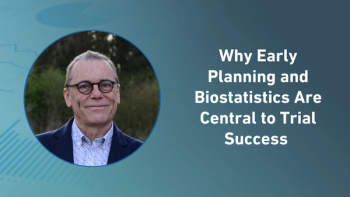
In this video interview, Marc Buyse, ScD, founder and CEO of IDDI, explains how early-stage planning, the estimand framework, and anticipating trial conduct problems can protect data integrity and make results more convincing and actionable.

Most protocol deviations start as human problems, not operational ones, but risk-based monitoring typically relies on lagging indicators that arrive too late to prevent these problems instead of measuring readiness during training, when intervention still matters.
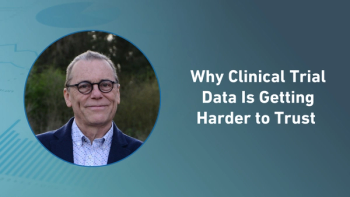
In this video interview, Marc Buyse, ScD, founder and CEO of IDDI, discusses how increasing trial complexity is making data interpretation less straightforward and why transparency and reproducibility are now essential.

In this first part of a 2-part perspective, clinical trial recruitment failures are reframed as design outcomes, making the case for embedding enrollment feasibility into protocol governance from the start.

Closing the gender gap in data science and tech requires tackling barriers at every stage, from early education through career advancement, while actively challenging the unconscious biases that continue to hold women back.

Webcasts
Webinar Date/Time: Thursday, March 26th, 2026 at 12pm EDT | 9am PDT | 4pm GMT | 5pm CET
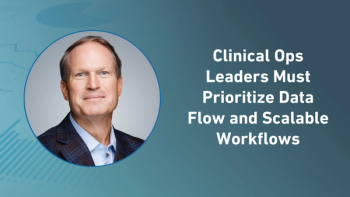
Jonathan Andrus, co-CEO of CRIO, discusses how governance across the data lifecycle, site-focused technology adoption, and scalable AI-enabled workflows will define operational readiness in 2026.
Advertisement
Advertisement
Trending on Applied Clinical Trials Online
1
2026 SCRS Global Site Solutions Summit: What Should Sponsors and CROs Change About How They Contract with a Network?
2
What It Actually Means to Embed AI Across the Clinical Operating Model
3
2026 SCRS Global Site Solutions Summit: What's a Mistake Sponsors or CROs Make When Rolling Out New Trial Technology?
4
2026 SCRS Global Site Solutions Summit: What's the Biggest Policy Gap Delaying Integrated, Community-Based Research Being the Norm?
5