





Clinical Operations & Strategy
Latest News
Advertisement
Latest Videos



Advertisement
More News
Advertisement

Why rigorous testing and validation matter more than ever.
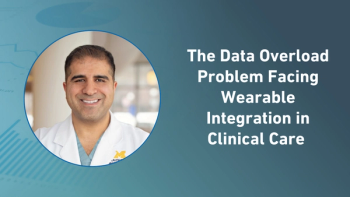
In this video interview, Mohammed Saeed, MD, PhD, chief medical officer of Solera Health, examines the operational challenges of incorporating wearable data into clinical workflows, including information overload and false alarm fatigue, and what those obstacles mean for patient safety.

Most protocol deviations start as human problems, not operational ones, but risk-based monitoring typically relies on lagging indicators that arrive too late to prevent these problems instead of measuring readiness during training, when intervention still matters.

In this first part of a 2-part perspective, clinical trial recruitment failures are reframed as design outcomes, making the case for embedding enrollment feasibility into protocol governance from the start.

Closing the gender gap in data science and tech requires tackling barriers at every stage, from early education through career advancement, while actively challenging the unconscious biases that continue to hold women back.

Webcasts
Webinar Date/Time: Thursday, March 26th, 2026 at 12pm EDT | 9am PDT | 4pm GMT | 5pm CET

As sponsors navigate rising complexity, AI adoption, and global scale, outsourcing strategies are shifting toward hybrid models, deeper CRO collaboration, and function-level flexibility to support execution in 2026.

Rising development costs, low success rates, and increasing trial complexity are reshaping the clinical trial project manager role, demanding stronger digital fluency, adaptive leadership, and expanded stakeholder coordination to deliver studies efficiently.

Webcasts
Webinar Date/Time: Thursday, March 12th, 2026 at 11am EDT | 8am PDT | 3pm GMT | 4pm CET

Explore how AI, decentralized tools, eSource, and IRT are reshaping clinical development operations in Applied Clinical Trials' February issue.
Advertisement

As trials expand into new geographies and decentralized models mature, sponsors are confronting a core operational challenge in 2026: how to scale global execution while reducing system complexity and day-to-day burden on research sites.

A look at how efficiency, access, platformization, AI, non-traditional players, and regulatory recovery are expected to reshape clinical operations in 2026.

Acknowledging the need to optimize decentralized adoption of innovation in clinical research.
Global clinical development has evolved into a technology-enabled, highly regulated, and geographically diversified enterprise, as sponsors adapt trial design, partnerships, and operations to meet rising demands for scale, speed, and patient-centricity.

The clinical trial ecosystem is entering a phase of consolidation and reinvention driven by the collapse of boundaries between functions, data, and even companies themselves.
Persistent recruitment delays, high dropout rates, and missed timelines continue to slow global clinical trials, while data show that sub-Saharan Africa offers a largely untapped opportunity with established research capacity, large patient pools, and strong enrollment and retention performance.
Review the performance, engagement, and satisfaction metrics sponsors and CROs should track to determine whether operational improvements are reducing burden and strengthening site relationships.
Learn how AI-enabled automation can streamline existing operational processes, reduce manual effort, and enhance efficiency while allowing sites to work as they do today.

Webcasts
Webinar Date/Time: Tuesday, January 27th, 2026 at 11am EST | 8am PST | 4pm GMT | 5pm CET
Examine how evolving sourcing strategies, functional standardization, and system choices can help sponsors support sites more effectively while minimizing operational switching and complexity.
Learn how clinical operations leaders can build technology adoption, transform workflows, and cultivate digitally savvy talent to successfully implement AI across the entire clinical trial lifecycle.
This pilot project evaluated whether targeted training could strengthen clinical research capacity at community cancer centers, improve readiness to conduct oncology trials, and support more inclusive patient enrollment by addressing barriers, building foundational skills, and increasing staff confidence in trial implementation.

See how combining human oversight with AI insights improves protocol authorship, site selection, and monitoring strategies, delivering better decisions than AI-only or human-only approaches.
Explore the drivers behind increased investment in CNS and autoimmune trials, including pain, mental health, and inflammatory conditions, and see how technology, decentralized trials, and hybrid designs are shaping study operations.

The Value of Pragmatic Randomized Clinical Trials: Strategic Approaches for Real-World Impact
BySeriant
Webcasts
Webinar Date/Time: Thu, Nov 20, 2025 11:00 AM EST | Broadcast Duration: 1 hour
Advertisement
Advertisement
Trending on Applied Clinical Trials Online
1
Building AI Assistants Clinical Trial Teams Can Trust: Q&A with E.K. Koh, Suvoda
2
What Needs to Happen Beyond the Clinical Trial Modernization Act
3
Walmart and Care Access Plan Three More Clinical Trial Centers in Michigan, Nevada, and Texas
4
From Signal to Action: Why Faster Trial Data Isn’t Producing Faster Decisions
5