


Applied Clinical Trials
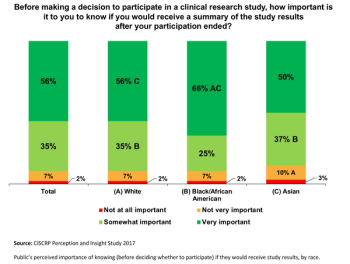
The third in a series of results from the Center for Information and Study on Clinical Research Participation’s (CISCRP) landmark 2017 Perceptions & Insights Study.
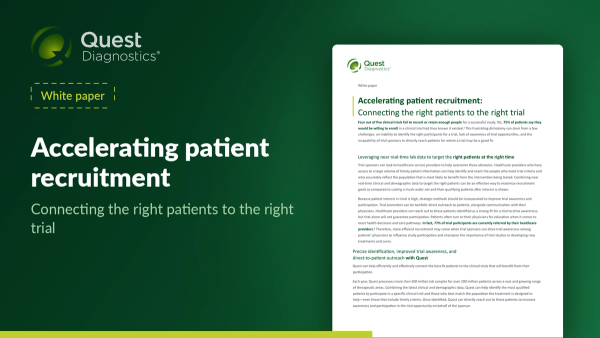
Discover how Quest Diagnostics puts its vast database of lab results to work and leverages patient and physician credibility to efficiently and effectively connect the best-fit patients to the clinical trials that will benefit from their participation.
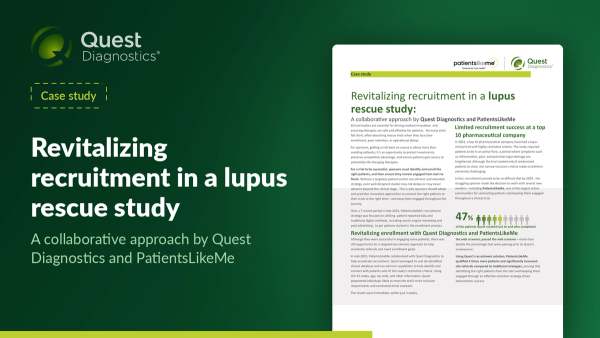
A collaborative approach by Quest Diagnostics and PatientsLikeMe
Decentralized clinical trials are positioned as a foundational competency as clinical research continues shifting toward broader access and real-world evidence generation.
Discover how Quest Diagnostics’ comprehensive lab data can elevate your clinical trials.
Applied Clinical Trials
The third in a series of results from the Center for Information and Study on Clinical Research Participation’s (CISCRP) landmark 2017 Perceptions & Insights Study.
Applied Clinical Trials
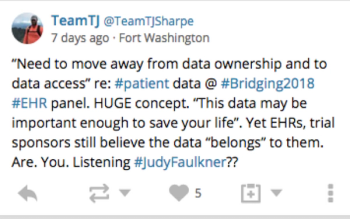
Lisa Henderson talks about the topic of "who owns a patient's data" as discussed at the Bridging Clinical and Healthcare Conference 2018.
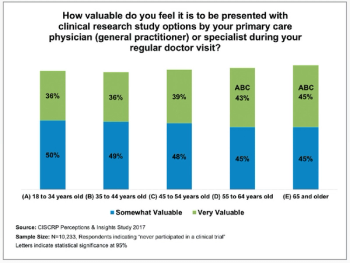
Applied Clinical Trials
The second series of results from the Center for Information and Study on Clinical Research Participation’s (CISCRP) landmark 2017 Perceptions & Insights Study.
Applied Clinical Trials
Building upon the usage of technology in health care delivery, integrating technology into clinical research as a care option will be a game changer in achieving greater participation in clinical research and decreasing the overall time for trial completion.

Applied Clinical Trials
The use of Learning Health Systems in order to advance clinical research.
Applied Clinical Trials
Lisa Henderson writes on patient participation and recruitment in clinical trials.
Applied Clinical Trials
Applied Clinical Trials
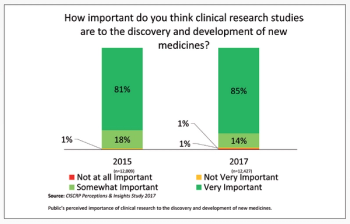
The first series of results from the Center for Information and Study on Clinical Research Participation’s (CISCRP) landmark 2017 Perceptions & Insights Study.

Applied Clinical Trials
In this interview, Julie Dietrich will provide more information regarding this Clinical Research Access & Information Exchange Initiative and how it is expected to benefit patients and the industry.
Applied Clinical Trials
Sandy Chase focuses on the voice of the patient and their experience after not completing a clinical trial.
Applied Clinical Trials
Recent study, and others in literature, inform misconceptions around physician and nurse involvement in clinical trials.
Applied Clinical Trials
Q&A discusses how the bridging of scientific merit with the needs of patients can lead to successful clinical development.
Applied Clinical Trials
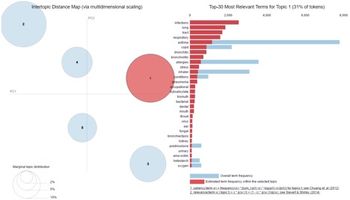
In this article, we will analyze themes from asthma patient conversations via HealthUnlocked, an online healthcare social network, and compare these themes to asthma clinical trial endpoints from large pharma studies.

We explore the remote trial and hybrid models in clinical trial patient centricity with Hassan Kadhim, an executive at Boehringer Ingelheim.
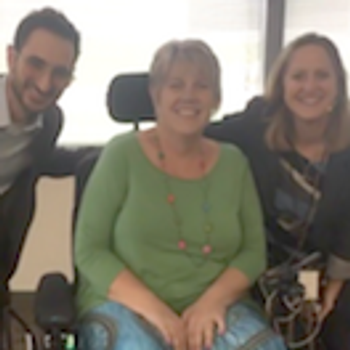
Our series on patient centricity continues with a patient perspective on her interpretation of this subject. Shelly Hoover, an ALS patient, shares her views with Moe Alsumidaie.
Finding the right clinical trial for yourself or others can be confusing and challenging. Matching services could provide potential relief, but only if aligned with both the physician and the patient.
It’s clear that pharma companies are working to embrace patient centricity and figure out where it best fits into their organizations. How this concept will be integrated into the structure of a company remains to be seen.
Rising patient engagement in drug development has been welcomed when it comes to discussions of policy. In Europe, a new initiative has emerged that aims to improve this theme by finding the right balance into patient links with decision-making on medicines.
As patient centricity continues to evolve, the differences in perspective between sponsors and the FDA over how to define this concept run parallel. With rising awareness will come the need for a definitive model that incorporates patient centricity in drug development.

Applied Clinical Trials
Q&A explores the evolution of community-based studies-and the related sample management, regulatory, compliance, and logistics support considerations.
The clinical trials space has shifted to a patient friendly, fast and easy process thanks to technological improvements, despite some gaps in the existing model. A Clinical Research Care Option (CRCO) can fill these gaps by fostering a more inclusive clinical research environment.

Applied Clinical Trials
Combining PRO data with clinical feasibility data can make a difference in diabetes care.
Applied Clinical Trials
Patients in Europe have been increasingly vocal in their demands for engagement in drug development and regulatory processes-and they have been increasingly effective.