






Protocol Design
Latest News
Advertisement
Latest Videos







Advertisement
More News
Advertisement

In part 3 of this three-part series, behavioral science reveals that clinical trial diversity cannot be achieved through last-minute recruitment efforts, but requires designing protocols, sites, and enrollment strategies around the real barriers and needs of underrepresented communities from the outset.

Insights from SCOPE 2026 highlight the industry’s shift toward connected, data-centric clinical trial ecosystems, where digital protocols, shared data, and renewed scientific rigor are driving more efficient, interoperable, and patient-focused research.

A look at how efficiency, access, platformization, AI, non-traditional players, and regulatory recovery are expected to reshape clinical operations in 2026.

The clinical trial ecosystem is entering a phase of consolidation and reinvention driven by the collapse of boundaries between functions, data, and even companies themselves.

Pharmacovigilance has advanced in detecting population-level safety signals, but a critical gap remains in translating those insights into transparent, defensible patient-level decisions.
By leveraging the Fresh Start Effect at site initiation and shifting from passive training to demonstrated readiness, sponsors and CROs can turn trial launch into a powerful multiplier for early performance, compliance, and execution quality.

Gain insight into why sponsors are taking a larger role in site selection and CRO oversight using robust data to validate feasibility before launch.
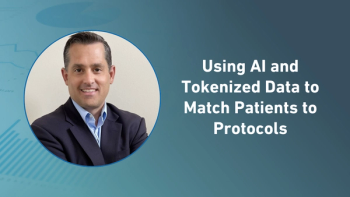
Understand how combining proprietary and real-world datasets with tokenization enables accurate protocol matching while maintaining privacy and compliance.
Learn how incorporating real-world data at study design can improve feasibility, reduce amendments, and align eligibility with findable patients across geographies.
Gain insight into how principal investigator scarcity, frequent protocol amendments, and uneven site performance undermine enrollment and extend timelines.
Advertisement
Learn how early regulatory engagement, validated digital systems, and robust protocol design enable biotechs to run parallel studies without compromising compliance or data integrity.

As pharma wrestles with whether to trust fully autonomous AI, semi-autonomous agents are emerging as a safer middle ground that reduces manual work, eliminates white space in clinical development, and accelerates trial timelines without compromising patient safety.

An analysis of primary Phase II protocols paired with their Phase III pivotal trials spotlights the need to balance scientific curiosity with participant and site burden.

In this video interview, Umesh Chaudhari, executive medical director and global program head of the C5 programs at Regeneron, explains how NIMBLE showed cemdisiran achieved strong efficacy with partial complement inhibition and reduced disease worsening compared to combination therapy.

In this Q&A, Randa Wahid of Indero, and Lyn Mursalo, a freelance clinical research professional, share how sponsors and CROs can build collaborative partnerships, navigate global trial complexities, and apply practical strategies to deliver studies on time and with quality.

How decentralized clinical trial designs and smart data integration are transforming the patient experience.

A 2025 survey highlights growing momentum for multi-indication drug development, with opportunities in innovative trial design, targeted patient selection, and real-world evidence to speed label expansion.

In this video interview, Meri Beckwith, Co-CEO of Lindus Health, shares practical ways clinical teams can strengthen trial protocols for expedited programs—such as incorporating control groups where possible, leveraging synthetic and real-world data, and adopting adaptive trial designs to reduce regulatory risk.

As clinical trials become more complex, success depends on early collaboration, thoughtful protocol design, and practical strategies to manage risk, reduce delays, and support patients.

In this video interview, Heather Horville, solutions consultant at Greenphire, emphasizes the growing need for clinical operations to embed patient-centric services—from consent through final visit—to improve retention and overall trial success.

In this video interview, Heather Horville, solutions consultant at Greenphire, discusses how clinical teams can boost participant retention in lengthy or complex trials through strategies like personalized engagement, stipends tied to ePRO diaries, and concierge services that offer one-to-one human connection.

In this video interview, Heather Horville, solutions consultant at Greenphire, shares how patient advocacy, localized insights, and real-world logistics can help clinical operations teams design studies that are more accessible to rural and minority populations.

In this video interview, Heather Horville, solutions consultant at Greenphire, discusses how growing financial and logistical burdens on participants are threatening study timelines and data quality—and why planning for retention earlier is becoming a clinops imperative.

Why future-ready pharma companies must embrace AI-driven, real-time decision-making.

In this video interview, Jim Kremidas, executive director, Association for MultiSite Research Corporations (AMRC), talks multisite clinical research corporations and how they can streamline clinical operations.
Advertisement
Advertisement
Trending on Applied Clinical Trials Online
1
Building AI Assistants Clinical Trial Teams Can Trust: Q&A with E.K. Koh, Suvoda
2
From Signal to Action: Why Faster Trial Data Isn’t Producing Faster Decisions
3
ACT Brief: Community Research Policy Needs, Walmart Trial Centers, and Psoriatic Arthritis Approval
4
Walmart and Care Access Plan Three More Clinical Trial Centers in Michigan, Nevada, and Texas
5