




Trial Design
Latest News
Advertisement
Latest Videos


Shorts
0:51
How Operational Errors Result in Organizational Shortfalls
6 months ago
by
Mark Freitas(+1 more)
0:30
Why Data Doesn't Speak For Itself Anymore
7 months ago
by
Marc Buyse(+1 more)

0:48
The Shift from Frequentist to Bayesian Mindsets
7 months ago
by
David Morton, PhD(+1 more)
1:30
ACT Ops Take: How Bayesian Methods Revolutionize Rare Disease Trials
8 months ago
by
Andy Studna, Senior Editor

0:34
The 1-2 Year Plan: How AI Is Immediately Transforming Clinical Trials
a year ago
by
Dipanwita Das(+1 more)
Advertisement
More News
Advertisement
This pilot episode of The Human Side of Clinical Trials introduces a framework from Brian S. McGowan, PhD, FACEHP, chief learning officer and co-founder of ArcheMedX, Inc., exploring why operational failures in clinical trials often trace back to gaps in human readiness rather than process design alone.

In this Q&A, Stella K. Vnook, PhD, CEO and executive chair of Kaida BioPharma and founder and CEO of Aviva Ventures, discusses how a trifecta of funding pressures is reshaping early-stage clinical development, why commercialization readiness can no longer wait until late-stage, and what a truly strategic lean development model looks like in practice.

AbbVie’s head of immunology clinical development, Kori Wallace, MD, PhD, discusses how combination therapies, translational science, and emerging immune-reset approaches could usher in a new era of treatment for inflammatory bowel disease and other autoimmune conditions.

With delayed trials carrying a significant cost burden, poor execution at the point of care is a liability no AI discovery tool can fix.

Phase III oncology setbacks often reflect incomplete biological understanding rather than target failures, but robust biomarker strategy and multi-dimensional patient selection developed early in development can strengthen pivotal trial design and increase success.

Discover how Quest Diagnostics puts its vast database of lab results to work and leverages patient and physician credibility to efficiently and effectively connect the best-fit patients to the clinical trials that will benefit from their participation.

Discover how Quest Diagnostics’ comprehensive lab data can elevate your clinical trials. Our latest white paper, "6 Ways Lab Data Can Improve Clinical Trials," explores the power of real-world data at every stage of the trial process.

As the clinical research landscape evolves, decentralized clinical trials (DCTs) have emerged as a foundational competency, enabling broader patient participation, increasing trial efficiency, and driving more inclusive, real-world data collection. However, the successful execution of DCTs requires more than just innovative technology—it demands a comprehensive strategy that addresses the unique challenges of decentralization.

Protocol complexity in clinical trials has risen for two decades, but the trend has not been comprehensively quantified by phase and sponsor across the full 2004–2025 window on ClinicalTrials.gov.

One Strategy, Two Jurisdictions: Unlocking Efficiency Across EU CTR and UK Regulatory Reform
ByEva Font
How sponsors can leverage both the EU Clinical Trials Regulation and UK’s reformed framework to achieve cost efficiencies, faster timelines, and stronger regulatory positioning.
Advertisement

From rising costs and regulatory uncertainty to persistent vaccine hesitancy, sponsors face mounting pressure to standardize operations, build community trust, and develop the behavioral capabilities needed to run vaccine trials effectively in a rapidly shifting environment.
From planning one Phase III trial at a time to digital standardization on repeat.

In this Q&A, Adrelia Allen, executive director of clinical trial patient diversity at Merck, discusses how the company is embedding diversity into clinical trial execution—from protocol design and site selection to long-term community engagement that extends well beyond individual trial timelines.

Pediatric trial participation shapes children's and caregivers' long-term psychological outcomes, yet protocol design often overlooks experience as a variable affecting recruitment, retention, and data integrity—a gap increasingly recognized by regulators and quality standards

FDA Commissioner Marty Makary’s departure caps a turbulent tenure marked by leadership instability, industry pushback, and a series of regulatory controversies that complicated drug development for sponsors and CROs.
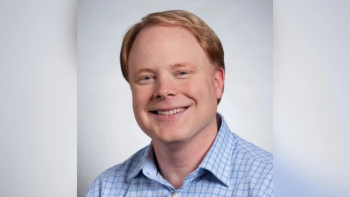
In this Q&A, Mark Freitas, managing director and life sciences practice lead at Alvarez & Marsal, discusses how clinical trial design has become a strategic business decision—and why small and midsize companies bear the greatest consequences when those decisions go wrong.

Early integration of clinical, operational, and patient-level insights during trial development can help close the gap between evidence generation and commercial performance, improving alignment between product value and real-world adoption.
In this video interview, Mark Freitas, managing director and life sciences practice lead at Alvarez & Marsal, discusses how crowded pipelines, compressed IP timelines, and competitive differentiation pressures are forcing smaller sponsors to treat protocol design as a core element of business strategy.
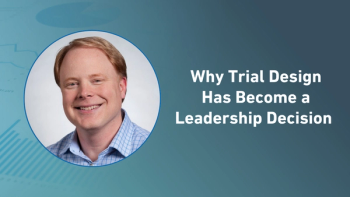
In this video interview, Mark Freitas, managing director and life sciences practice lead at Alvarez & Marsal, explains why the most consequential shift in clinical trial design is not methodological but organizational, and what an analysis of 200 FDA complete response letters reveals about where decisions are going wrong.
Behavioral science reveals how recruitment failures, site disengagement, and underrepresentation in clinical trials are rooted in early design decisions, and what sponsors can do to address them before they become costly problems.

In this video interview, Mwango Kashoki, MD, MPH, senior vice president and global head of regulatory strategy at Parexel, outlines the steps sponsors can take today—from early FDA engagement and robust non-clinical programs to adaptive trial designs and confirmatory evidence packages—to avoid delays as the guidance moves toward finalization.

In this Q&A, Jenna DiRito, PhD, COO and co-founder of Revalia Bio, discusses how earlier, human-relevant data is reshaping go/no-go decision-making in drug development and what a truly front-loaded workflow looks like in practice.
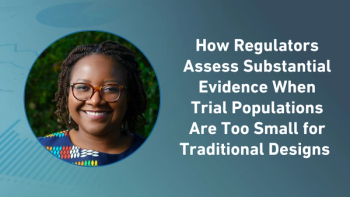
In this video interview, Mwango Kashoki, MD, MPH, senior vice president and global head of regulatory strategy at Parexel, breaks down how the FDA evaluates substantial evidence of effectiveness for individualized therapies in ultra-rare conditions, and why that determination depends on the totality of mechanistic, biomarker, and clinical outcome data rather than trial numbers alone.

In this Q&A, Krishna Cheriath, VP and head of clinical research digital data and AI at Thermo Fisher Scientific, examines how AI is reshaping clinical operations—from case intake and trial design to site burden reduction and the emerging reality of agentic AI in the workforce.

In part 3 of this three-part series, behavioral science reveals that clinical trial diversity cannot be achieved through last-minute recruitment efforts, but requires designing protocols, sites, and enrollment strategies around the real barriers and needs of underrepresented communities from the outset.
Advertisement
Advertisement
Trending on Applied Clinical Trials Online
1
Where the Industry Is Headed as Clinical, Operational, and Real-World Data Connect
2
Building Standardized Evidence for eSource-Enabled Clinical Trials: Multi-Site Validation of a Clinical Research Coordinator Satisfaction Methodology
3
Where AI Governance in Clinical Development Falls Short
4
Syneos Health, Optum Partner on Adaptive Clinical Development Model
5